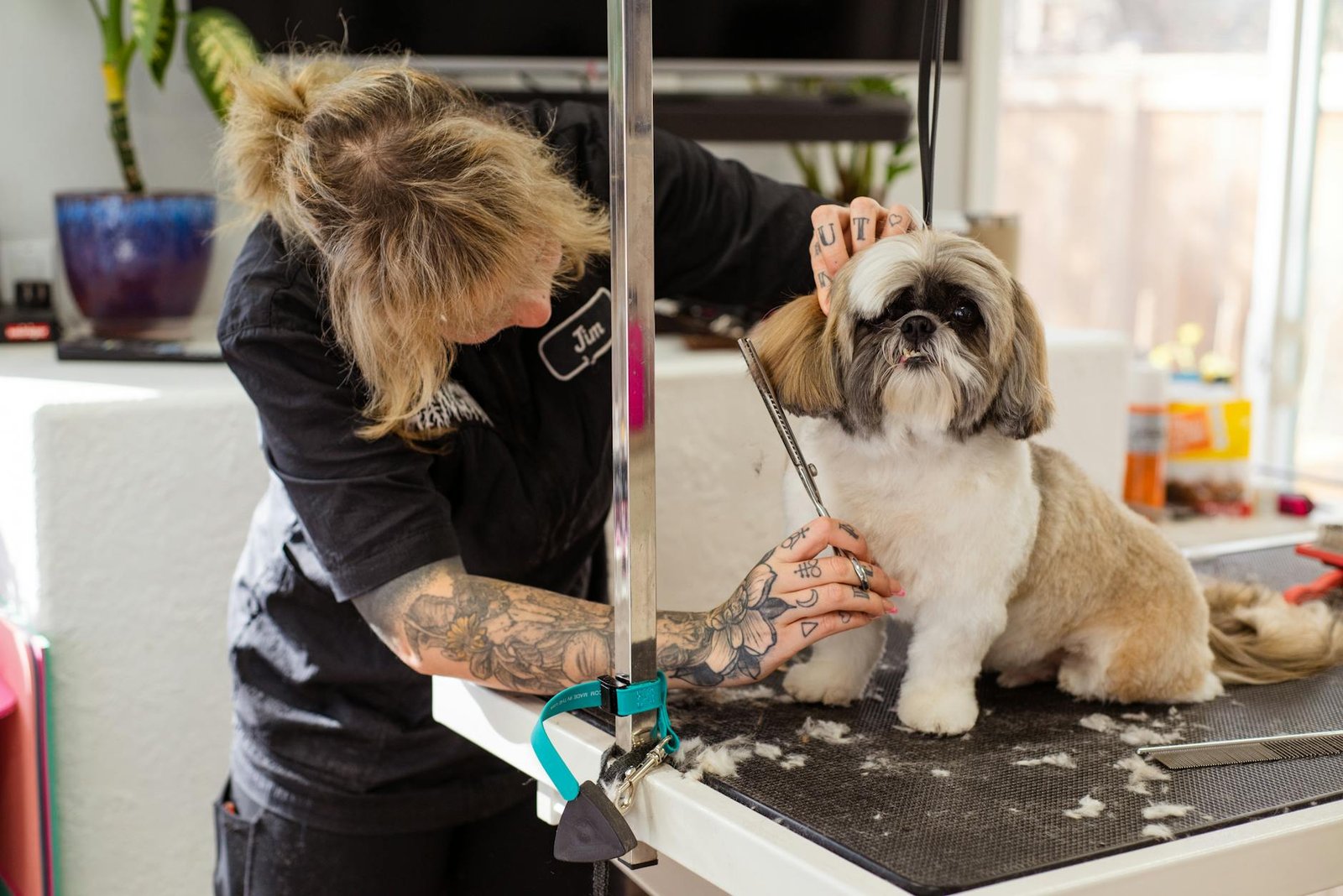
A pet owner in Beverly or Danvers pulls out their phone, types “dog groomer near me,” and starts scrolling. The shops at the top of that results page are the ones filling their books next week. The salons with the cleanest haircuts and friendliest staff but a thin web presence? They get passed over before the owner ever learns they exist. For independent groomers competing against national chains, the Google results page has quietly replaced the storefront window on Cabot Street or Maple Street as the first impression that matters.
That shift creates an opening. Owners are actively looking for alternatives to the big chains right now, and most independent shops on the North Shore have not done the basic search work needed to catch them. A few targeted moves — claiming the right listings, structuring a site around booking intent, working reviews into a steady flow — can move a small grooming business from page two into the local map pack within a single quarter.
This article walks through why pet owners are switching, how the local search landscape actually works in Beverly and Danvers, what your website needs to convert a searcher into a booking, the SEO tactics a one- or two-person shop can realistically execute, how to turn reviews and referrals into visibility, the mistakes that quietly cost bookings, and the concrete next step to take this week.
Why Owners Are Searching For Alternatives Right Now
Something has shifted in how Boston’s North Shore pet owners shop for grooming. The default move used to be a national chain because the chain was the only name people knew. That default is breaking down. When an owner in Beverly or Danvers types “dog groomer near me” into Google, they are increasingly clicking past the chain results and looking for independent shops, mobile vans, and one-person studios. The research bundle backing this article shows exactly the kind of local options people now surface: Style Pet Grooming, a fully equipped mobile grooming service run by an owner named Rafael that serves Beverly neighborhoods, Salem, Peabody, and Danvers, with a published phone number and a clear promise of one-on-one grooming with no car rides for the pet.
That is the kind of listing winning attention right now. Owners are not just price-shopping. They are looking for a calmer experience for their animal, a real person on the other end of the phone, and a service that matches the geography of the North Shore rather than a generic national footprint.
The friction that sends searchers back to Google
Here is the moment that creates opportunity for an independent groomer. A pet owner clicks a chain result and lands on something like PetSmart’s sign-in portal instead of an immediately bookable service page. They have to remember a password, recover an account, or wade through a corporate template before they can even check whether grooming is available in their town. Consequently, many of those owners bounce. They return to the search results and start clicking the next listing down. If your shop is that next listing, you are in the running.
What this means for your business
For a Beverly or Danvers grooming business, this redirected traffic is the single most important pool of demand to chase right now. Furthermore, it is demand that is actively in motion, not loyalty you have to break.
Pros of chasing chain-switcher traffic:
- The searcher is already in buying mode, not just browsing.
- Intent is local and specific, which favors small operators with tight geographic targeting.
- A clean, fast booking page beats a corporate login screen on almost every dimension that matters to a frustrated owner.
Cons to plan around:
- You are competing with other independents like Loyal Canines Academy on Park Street in Beverly, not just chains.
- Mobile competitors who travel to the customer raise the bar on convenience.
- Without a real local web presence, you are invisible at the exact moment the searcher is most ready to book.
The remainder of this article is about closing that last gap.
Mapping The Local Search Landscape In Beverly And Danvers
Before you can capture anyone’s switching search, you need a clear picture of where those searches land today. The North Shore market does not run through a single search box. It runs through a patchwork of directory listings, neighborhood apps, and word-of-mouth threads, and each one surfaces different groomers depending on who is asking and where they live.
The Directories Owners Actually Open
When a Beverly owner types “dog groomer near me” or asks in a neighborhood thread, results route through a handful of platforms more often than any other. Care.com lists pet groomers serving Beverly, MA alongside its broader caregiver inventory, which gives groomers exposure to households already comfortable booking services through an app. WhoDoYou publishes a ranked list of pet groomers in Beverly sourced from neighbor referrals, and Nextdoor hosts local business pages such as Style Pet Grooming in Beverly where activity comes from verified neighbors rather than anonymous accounts.
Each platform behaves differently, so a small groomer should think about them as separate funnels:
- Care.com pros: booking-ready audience, broad reach, profiles tied to a recognizable national brand.
- Care.com cons: you compete against national caregivers, and profile depth matters.
- WhoDoYou pros: referral-style listings carry social proof, and threads attract high-intent local searches.
- WhoDoYou cons: you cannot fabricate referrals — you need real neighbors to surface your name.
- Nextdoor pros: verified-neighbor reviews and a hyperlocal radius keep results genuinely local.
- Nextdoor cons: visibility favors business pages that are actively maintained.
Why Referral Threads Outrank Paid Profiles
The most telling result in the local research is a WhoDoYou exchange in which a neighbor named Kara C. asked the area for a doggie day care recommendation, and Carolee V. answered with a specific name, a street, and a phone number: Jermaine Anderson at Loyal Canines Academy on Park Street in Beverly, (978) 969-6364. That single thread keeps surfacing for grooming-adjacent searches because it pairs a real question with a specific, named answer. Furthermore, it shows how a single neighbor’s reply can do more for a small groomer than a paid directory upgrade. For your business this means a directory listing alone is not enough. You need to be the name a neighbor types into a thread when someone else asks.
The I-95 And Route 1 Corridor As A Keyword Cluster
Beverly, Salem, Peabody, and Danvers sit close enough along the I-95 and Route 1 corridor that travel time blurs the borders. Travel infrastructure in the area is described in Motel 6’s own copy as putting visitors within easy reach of Salem, Beverly, Peabody, and downtown Boston, and that same road network is what a mobile groomer uses to reach four ZIP codes from a single van. The mobile operator in the research already markets across Beverly, Salem, Peabody, and Danvers from one phone line, 781-710-3832. Therefore, your keyword targeting should cluster by corridor, not by town: “dog groomer Beverly Salem,” “mobile pet grooming North Shore,” “Danvers dog grooming near Route 1.”
What this means for your business — audit this week. Pull up your shop on Care.com, WhoDoYou, and Nextdoor. Confirm that address, hours, and phone number match across all three. Search the WhoDoYou and Nextdoor threads for each of the four corridor towns and note where competitors get named by neighbors and you do not. Those gaps are your first targets.
Building A Website That Converts Switching Searchers
A pet owner who just decided to leave PetSmart is not browsing for fun. They are mid-task, often on a phone, and they want to know three things in under ten seconds: do you cover their town, what does a basic groom cost, and how do they reach you right now. The website that answers those three questions on the first screen wins the booking. The one that buries them under a slideshow and a mission statement loses to whoever ranked one slot lower.
The Booking Page Essentials
Every service page should lead with the same three elements: a service area map or plainly listed towns, transparent pricing (or at least a “starting at” figure and what affects it), and a click-to-call phone number rendered in plain text near the top. The mobile-grooming listing for Style Pet Grooming on Nextdoor’s local pages directory is a useful model — the listing names the owner, states that the service covers Beverly neighborhoods plus Salem, Peabody, and Danvers, and publishes 781-710-3832 right next to the service description. A switching searcher can act on that in one tap. Furthermore, putting the phone number in actual text (not an image) lets mobile browsers turn it into a dial link automatically.
Mobile-Grooming Versus Storefront Positioning
The two business models read very differently on the web, and the homepage copy should reflect that honestly.
Mobile-grooming positioning
– Pros: leans into the “no car rides, no stress” angle that switching owners actively search for; service area becomes a feature, not a limitation; van photos are strong social proof
– Cons: pricing is usually higher and needs upfront justification; scheduling windows are narrower; no walk-in traffic to convert
Brick-and-mortar storefront positioning
– Pros: a real address builds trust and pulls Google Maps traffic, the kind that surfaces shops like Loyal Canines on Park Street in Beverly when neighbors ask for recommendations on WhoDoYou’s Beverly groomer threads; easier same-week availability
– Cons: customers absorb the drive and the wait; you compete more directly on price with the chain you are trying to take share from
Pick one and write the homepage to it. Trying to be both reads as neither.
Write Pages Around Real Neighborhoods
Generic “North Shore grooming” copy ranks against every shop from Lynn to Gloucester. A page titled “Dog Grooming in Danvers, MA” that names the specific streets and landmarks you serve ranks against a much smaller field. Moreover, the page can speak to local context a chain page never will — proximity to specific neighborhoods, parking notes, even references to nearby anchors like the cluster of lodging documented on the Motel 6 Danvers page that brings out-of-town pet owners through the area.
Therefore, one landing page per town almost always outperforms a single catch-all services page. Beverly, Danvers, Salem, and Peabody each get their own URL, their own H1, their own testimonials from customers in that town, and their own driving-directions paragraph. What this means for your business: four focused pages give Google four chances to rank you for four different “groomer near me” queries, instead of one diluted page fighting on all fronts.
Local SEO Tactics Independent Groomers Can Actually Execute
The good news for independent shops on the North Shore is that local search is one of the few channels where a small operator can outrank a national chain on its home turf. Google’s local algorithm rewards proximity, relevance, and prominence — and a Beverly groomer with twenty real reviews from Beverly customers is more relevant to a “dog groomer near me” search in Beverly than a corporate page targeting the entire Boston metro. The tactics below are the ones a single-location shop can realistically execute without hiring an agency.
Get The Google Business Profile Right Before Anything Else
Your Google Business Profile is the asset that shows up in the map pack, and it deserves more attention than your website in the first ninety days of any local SEO effort. Pick the most specific primary category available (“Pet Groomer” rather than “Pet Store”), then add secondary categories for any genuinely separate services you offer such as boarding or daycare. Define a service area that lists the towns you actually serve — Beverly, Danvers, Salem, Peabody — rather than a vague radius. Upload real photos of your shop, your van if you operate mobile, and finished grooms, and replace them quarterly so the profile does not look frozen in time.
Review cadence matters more than review count. A profile that earns two or three new reviews a month consistently signals an active business; a profile with forty reviews from 2022 and nothing since signals the opposite. Build a simple text-message template you send after every appointment with a direct link to your review form.
Claim Citations On The Platforms Owners Actually Use
The research turned up three platforms where North Shore pet owners are visibly looking for groomers, and each is worth a claimed, completed listing. Mobile operator Style Pet Grooming, for example, maintains a Nextdoor business page that explicitly names the Beverly, Salem, Peabody, and Danvers service area — useful both as a citation and as a template for how to phrase your own coverage. Care.com runs a directory of pet groomers in Beverly, MA that ranks for branded and category searches, and WhoDoYou aggregates neighbor recommendations on its Best Pet Groomers in Beverly, MA page, which is where referral threads like the one recommending Loyal Canines Academy on Park Street surface.
Pros and cons of citation-building this way:
- Pros: free, durable, and each listing reinforces NAP (name, address, phone) consistency that Google uses as a trust signal.
- Cons: time-consuming to claim manually, easy to let details drift out of sync, and some platforms gate review responses behind paid tiers.
Pick one canonical version of your business name, address, and phone number and use it identically everywhere. A “Suite A6” on one listing and “Unit A6” on another is the kind of mismatch that quietly suppresses rankings.
Target Long-Tail Booking Intent, Not Vanity Keywords
“Dog groomer Boston” is a losing fight. “Mobile dog groomer Danvers,” “cat grooming Beverly MA,” and “puppy first groom Peabody” are winnable because the chains are not writing pages for them. Build one short blog post or service page per phrase, each answering the question a worried owner is actually typing at 9pm on a Sunday.
Moreover, neighborhood-level content beats town-level content when the chain has already claimed the town. A page titled “Cat Grooming in the Ryal Side Neighborhood of Beverly” cannot be matched by a PetSmart corporate template. What this means for your business: every long-tail page you publish is a permanent asset that keeps earning bookings long after the hour you spent writing it.
Turning Reviews And Referrals Into Search Visibility
Reviews and neighbor recommendations do two jobs at once. They tell Google that real people in Beverly and Danvers trust your business, and they tell prospective customers the same thing in language that feels human. When someone posts on Nextdoor asking for a groomer recommendation, the responses become a public, indexable trail that search engines crawl and that owners switching from PetSmart actually read before they book.
Why Neighbor Recommendations Carry Double Weight
A recommendation thread on a community platform is not a press release. It is one neighbor telling another neighbor what worked. The Best 5 Pet Groomers in Beverly, MA listing on WhoDoYou is built entirely from referral conversations like “Anyone have a reco for a doggie day care in the area?” — questions that pull genuine, dated responses from locals. That mix of social proof and freshness is exactly what a chain location’s static page cannot reproduce.
Furthermore, these listings carry your service-area keywords without you having to write them. When a neighbor mentions you alongside “Beverly,” “Peabody,” or “Danvers” in their own words, that co-occurrence reinforces the geographic signal you have already built on your own site.
A Repeatable Process For Asking After Each Appointment
The mistake most small groomers make is asking once, awkwardly, at checkout. A better approach is to systematize it without sounding scripted.
- After payment, hand the owner a small card with a QR code that points to your Google Business Profile review link.
- Send a follow-up text the same evening, thanking them by their dog’s name and including the same link.
- One week later, send a second short message asking how the coat is holding up — and only then mention that a quick review helps neighbors find you.
The three touches feel like care, not pressure. The dog’s name in the message is the detail that converts.
Responding In A Way That Reinforces Your Service Area
Every reply you write to a review is another opportunity to place your keywords naturally. Thank the customer, mention the specific service (“the de-shedding bath for Murphy”), and name the neighborhood or town they came from. A profile like Style pet grooming on Nextdoor gains visibility partly because owner responses reinforce the local context of each interaction.
Pros of a structured review program:
– Compounds over time — each review is a permanent ranking and trust asset.
– Costs nothing beyond a few minutes per appointment.
– Surfaces your business in the exact threads where PetSmart switchers ask for alternatives.
Cons to be aware of:
– Negative reviews will eventually arrive; you need a calm response template ready.
– Asking too aggressively can backfire and feel transactional.
– Platforms change policies, so do not over-rely on any single one.
What This Means For A Groomer With Fewer Than A Dozen Reviews
Notably, going from eight reviews to thirty in a quarter is achievable for a solo groomer who services roughly forty appointments a month. What this means for your business: if you convert even one in four customers into a public reviewer, you close the visibility gap with established competitors within a single grooming season — and you do it using the same neighbor-to-neighbor channel that PetSmart’s corporate accounts cannot authentically participate in.
Common Mistakes That Cost Independent Groomers Bookings
Even groomers with strong skills and loyal regulars lose bookings to avoidable website and operations mistakes. The pattern repeats across the North Shore: a competent solo operator builds a basic Facebook page or a one-page site, treats it as a digital business card, and then wonders why the steady stream of “PetSmart refugees” never quite materializes. The friction is almost always in the booking path, the geographic framing, or the mobile experience — not in the grooming itself.
Hiding Pricing, Service Area, and Booking Behind a Contact Form
The single most expensive habit is forcing every prospective client to fill out a contact form before they learn your prices or whether you serve their street. Owners switching from a national chain are accustomed to seeing a price grid and clicking “book now.” When your site instead asks for name, email, dog breed, and a paragraph about their needs before revealing anything, a meaningful share of visitors leave for the next groomer in the search results. Mobile groomers like Style Pet Grooming in Beverly handle this well by publishing a phone number, service radius, and a plain description of what they do directly on the listing, so the caller already knows they are in the right place before the phone rings.
Pros and cons of an instant-booking widget versus a contact form:
- Pros of instant booking: matches PetSmart’s online experience, surfaces availability without a phone tag loop, captures evening and weekend leads while you sleep.
- Cons of instant booking: harder to triage difficult coats or aggressive dogs upfront, requires you to keep your calendar honest, costs a monthly software fee.
- Pros of a contact form: lets you screen unusual jobs before committing a slot.
- Cons of a contact form: every required field is a place where a tired owner on a phone gives up.
Treating Beverly, Salem, Peabody, and Danvers as One Market
A second recurring mistake is writing service-area copy that lumps every nearby town into a single sentence. Beverly, Salem, Peabody, and Danvers each have their own parking realities, traffic patterns, and resident expectations. A van-based groomer working Ryal Side is making different routing decisions than one covering downtown Salem during a fall tourist weekend or the dense neighborhoods near the Route 1 corridor in Danvers. Consequently, owners searching “mobile dog groomer Peabody” want to see Peabody on the page, not a generic “North Shore” banner. Dedicated short pages for each town, each with its own ZIP codes and a real local landmark or two, consistently outperform one blended service-area page.
Mobile Speed, Click-to-Call, and Over-Optimizing
Furthermore, the phone matters more than the homepage. If your number is buried in an image or not wrapped in a tel: link, a thumb tap does nothing and the caller bounces. Pages that take five seconds to render on a mid-range Android device lose the search ranking they were optimized for. However, the opposite failure is just as costly: groomers who obsess over keyword density, schema markup, and weekly blog posts while letting voicemails sit for two days. SEO buys the click. The phone, the texts, and a same-week appointment slot close the booking.
Need Help with Your Small Business Website?
If you’re a small business owner looking to build, redesign, or improve your website, we’d be happy to discuss your specific needs. Monir Tech Solutions specializes in small business website design, development, and maintenance for small businesses across the Boston area and beyond — including custom websites, e-commerce, POS integration, and ongoing support.
Reach out anytime at info@monirtechsolutions.com and we’ll respond within 24 hours.
The Bottom Line
The owners typing “dog groomer near me” on a Tuesday morning in Beverly or Danvers are not loyal to PetSmart. They are loyal to whoever picks up the phone, has Saturday availability, and looks legitimate on Google. Capturing that traffic does not require an agency retainer or a six-figure rebuild. It requires four levers a single-van or single-storefront operator can pull this quarter: a website with dedicated pages for each town you actually serve, a fully built Google Business Profile with current hours and recent photos, consistent name-address-phone listings on the directories owners actually browse, and a steady drip of fresh reviews that prove you are still in business.
The small-business reality
None of this is glamorous, and none of it is beyond a working groomer who can spare two focused hours a week. The local pet-services landscape on platforms like WhoDoYou’s Beverly listings and Care.com’s Beverly groomer directory is built largely by independent operators, not chains. That is the opening. A national retailer cannot credibly write “we groom Goldens in Centerville” or post a photo of a Shih Tzu on the same bench every Thursday. You can. The owner who left PetSmart after a bad experience is specifically looking for someone who is not PetSmart, and the signals that prove it are local pages, local photos, local reviews, and a phone that gets answered.
Pros and cons of running this yourself versus outsourcing:
- Pros of DIY: No monthly retainer, full control over your reviews and replies, you know your schedule and pricing better than any agency, changes ship the same hour
- Cons of DIY: Two to four hours of focused work each week, a learning curve on Google Business Profile features, easy to procrastinate when the grooming table is busy
- Pros of hiring help: Faster initial setup, someone else watches the listings for drift, professional photography
- Cons of hiring help: Monthly cost that eats two to three full grooms, agencies often batch local SEO across dozens of clients and miss the specifics that win bookings
Your next step this week
Pick one ninety-minute block before Friday. Open your Google Business Profile and check three things: are your hours correct for the next two weeks including holidays, is your service area set to both Beverly and Danvers (plus any nearby town you actually drive to), and have you posted a photo within the last thirty days. Then claim or verify your listing on the two directories where local owners are already searching for groomers in your area, including the Nextdoor business pages format that surfaces neighborhood-level results. Therefore, by Saturday morning, the next owner who searches “dog groomer Beverly MA” after a frustrating PetSmart visit will find a profile that looks active, accurate, and ready to take their call.