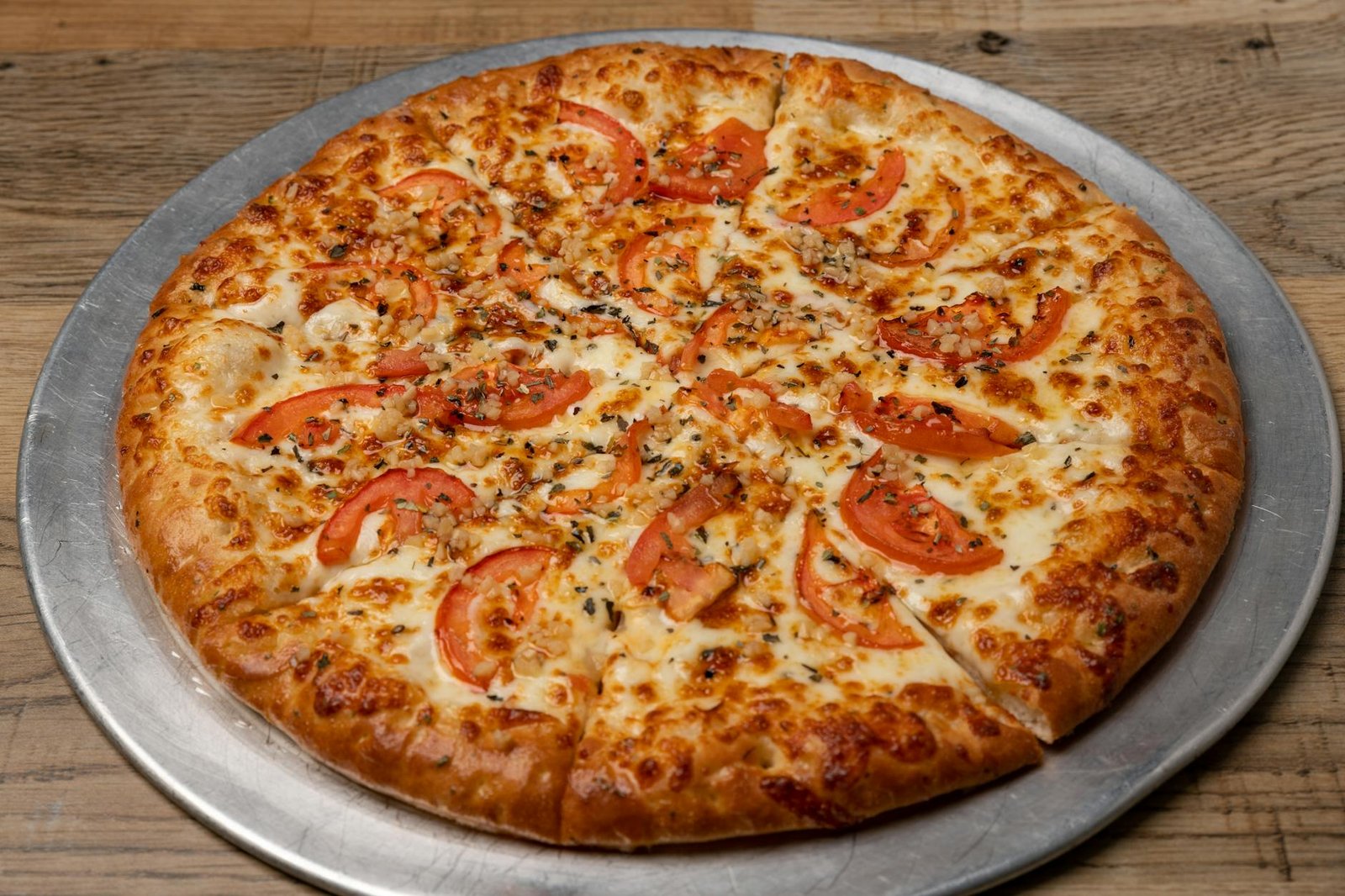
Friday night in Roslindale and West Roxbury follows a familiar rhythm: phones come out, thumbs start tapping, and somewhere in thousands of kitchens a household decides where pizza is coming from tonight. The real question for the shops doing the baking is whether that decision happens on their own website, or on a DoorDash ad bidding against their own name in the search results.
That single moment, repeated across a neighborhood every weekend, is worth tens of thousands of dollars a year in margin. The shops that capture it directly keep their full ticket. The shops that lose it to a marketplace ad pay a commission on a customer who was already looking for them by name. The gap between those two outcomes is rarely about food quality. It is almost always about how the shop shows up in local search, how fast its site loads on a phone, and whether ordering takes two taps or seven.
This article walks through how an independent pizza shop in Roslindale or West Roxbury can win that Friday night search. You will see why the moment matters, what the searcher actually wants, how to fix your Google Business Profile and website, when direct ordering beats the marketplaces, how to defend your branded search from paid ads, and a bottom-line checklist you can act on this week.
Why Friday Night Pizza Search Is a Battleground in Roslindale and West Roxbury
It is 6:47 p.m. on a Friday. A family in West Roxbury, the Boston neighborhood tucked into the southwest corner of the city, separated from Roxbury by Roslindale and Jamaica Plain, has just finished a long week. Someone picks up a phone and types “pizza delivery near me.” In the next ninety seconds, that household will decide who gets roughly thirty dollars of dinner money. The question is whether the order lands with a neighborhood shop directly, or whether it routes through an aggregator that takes a cut off the top.
That ninety-second window is the battleground. And independent shops are not the only bidders for it.
The Searcher Wants Dinner, Not a Decision
The hungry searcher is not shopping carefully. They are scanning. They want a phone number, a menu, a delivery estimate, and a price. The first result that satisfies all four wins. Local favorites like Roslindale House of Pizza, which remains one of the most popular pizza spots in Roslindale, and DeNo’s Pizza & Subs, which maintains its own online ordering and delivery system for take-out and deliveries, have everything that searcher needs. The problem is whether the shop is visible at the exact moment the search happens.
Aggregators Are Buying the Top of the Page
The reason this is a battleground and not a stroll is that marketplaces compete aggressively for the same query. Slice, for example, maintains a directory page specifically aimed at pizza delivery in West Roxbury, and DoorDash routinely buys paid placement against branded restaurant searches. When a customer types your shop’s name and sees a sponsored result for an aggregator first, the click often ends up costing you margin even though the customer was already trying to find you.
Consequently, the economics are stark for an independent operator:
- Direct order: the shop keeps the full ticket minus card processing. The customer relationship belongs to the shop. Repeat orders are easy to encourage.
- Marketplace order: the shop pays a commission per order, sometimes a delivery fee on top, and the customer’s contact details typically stay with the platform.
Pros of relying on marketplaces:
– Built-in audience and visibility on Friday nights
– Logistics and driver dispatch handled for you
– Useful for filling gaps when your dine-in is full
Cons of relying on marketplaces:
– Commissions compress already-thin pizza margins
– You do not own the customer data
– Marketplaces bid on your own name in paid search
What This Means for Your Shop
Furthermore, the playbook to win Friday night is not a mystery. It is a stack of unglamorous fundamentals: a well-tended Google Business Profile, a fast mobile site with a working menu, an on-site ordering flow, steady review velocity, and defensive search positioning around your own brand name. Shops like A&N House of Pizza in Roslindale already have the food and the loyalty. The rest of this article walks through the digital side, so the next time someone in 02132 reaches for the phone, your shop is the answer that appears first.
Understand the Search Intent Behind ‘Pizza Near Me’ on a Friday Night
A Friday night pizza search is not one question. It is three different questions wearing the same costume, and if you do not know which one a given customer is asking, you will optimize for the wrong screen, the wrong keyword, and the wrong moment. Before you touch a single tag on your site, you have to sort the traffic into the buckets that actually convert.
The Three Intents Competing for the Same Query
Search marketers usually split queries into navigational, commercial, and transactional. On a Friday at 7:15 p.m. in Roslindale, all three are firing at once.
- Navigational — someone already knows the shop. They type “Roslindale House of Pizza” because they want the number, the hours, or the order link. The shop’s own site notes that Roslindale House of Pizza remains one of the most popular in Roslindale, which means a meaningful share of local pizza searches are people looking for that brand by name, not shopping.
- Commercial — someone is choosing. They are scanning a directory, comparing menus, reading reviews. A roundup like the 50 best pizza restaurants near Roslindale on Restaurantji is the kind of page that catches this person mid-decision.
- Transactional — someone is ready to order in the next ten minutes. They want a phone number, a delivery button, or a checkout flow. Shops like DeNo’s Pizza & Subs, which advertises an online ordering and delivery system built for timely take-out and deliveries, are built around this moment.
Friday evening skews transactional. The kids are hungry, the work week is over, nobody is researching crust styles. That intent shows up on mobile, and on mobile Google’s local pack and map results dominate the visible screen before a single organic blue link.
Keyword Choices That Match Local Intent
Therefore, the keywords worth chasing are the ones a national brand cannot drown in ad spend. “Pizza” is unwinnable. “Pizza delivery Roslindale,” “pizza West Roxbury Centre Street,” and “open now pizza 02132” are different animals. Centre Street is a real anchor for West Roxbury, a Boston neighborhood profiled on Wikipedia, and aggregator pages such as Slice’s West Roxbury pizza delivery listings reinforce that hyper-local layer in Google’s index.
Hyper-local keywords vs. broad terms — quick trade-off:
- Pros of hyper-local: lower ad competition, higher conversion, qualified delivery-radius traffic, defensible against national brands.
- Cons of hyper-local: lower monthly search volume, requires neighborhood and ZIP-level content that takes time to build.
- Pros of broad terms: large volume, prestige.
- Cons of broad terms: DoorDash and similar aggregators will outbid a single shop on every auction, every night.
What this means for your business: do not try to rank for the keyword DoorDash is bidding on. Rank for the keyword the customer two blocks away is typing while standing in their kitchen. That is a fight you can win, and it is the only fight worth picking on a Friday night.
Claim and Optimize Your Google Business Profile Before You Touch Anything Else
The Google Business Profile is the single highest-leverage asset a neighborhood pizza shop owns. When someone in Roslindale picks up their phone at 9:47 PM on a Friday and types “pizza delivery near me,” the local pack — that map block with three businesses underneath — is the real estate that determines the next forty-five minutes in your kitchen. Aggregator ads compete for the same screen, but the local pack rewards proximity, relevance, and engagement signals in ways paid placement cannot fully overwrite. Claiming the profile is free. Optimizing it well is the cheapest competitive moat you have against DoorDash’s ad budget.
The Fields That Actually Move Friday Night Rankings
Most claimed profiles get the basics in and stop there. The shops that win Friday night searches treat the profile as a living storefront rather than a directory entry. Hours need to reflect your true late-night Friday closing time, not the optimistic 11 PM you typed in three years ago. If your kitchen takes a last delivery order at 12:45 AM, that has to be in the profile, because being marked closed during the exact moments people are searching for delivery is the surest way to lose the impression.
Specifically, the fields that earn their keep:
- Accurate hours, including any extended Friday and holiday windows
- A clearly defined delivery service area
- A current menu with prices that match your printed menu
- Photos of your actual pies, not stock images of generic pizza
- An “Order online” link pointing to your own ordering page — the way DeNo’s Pizza & Subs maintains its own online ordering and delivery system rather than handing every lead to a marketplace
That last point is where most shops bleed revenue. If your “Order online” button on Google routes to a third party, you have just paid Google’s local pack tax in attention and a commission in cash. Pointing it to your own site keeps the full margin.
Review Velocity and Recency Beat Total Review Count
Recency tends to matter more in the local pack than raw review totals. Twelve reviews from the last ninety days will frequently outperform three hundred reviews stacked up in 2021. The aggregators understand this clearly — Slice’s directory surfaces customer reviews with explicit recent dates such as 5/18/2026 right on its West Roxbury delivery listings, because freshness is the signal everyone is competing on.
Furthermore, response matters. Replying to every review within forty-eight hours — even a one-line thank you — feeds an engagement signal Google factors into ranking. It also turns a one-star complaint into a conversation prospective customers can read.
Pros of treating GBP as your primary marketing channel:
– Free, owned, and directly tied to local pack ranking
– Edits take effect within hours
– Direct calls and direction taps bypass aggregator commissions entirely
Cons:
– Requires consistent weekly attention
– Menu and photo updates are manual
– Review velocity demands an ongoing habit of asking happy customers
What this means for your business is straightforward. Before you spend another dollar on Instagram, before you rebuild the website, claim or audit the profile this week, set your true Friday hours, replace any third-party ordering link with your own, and start asking every happy delivery customer for a review by text. The neighborhood — a Boston enclave whose history reaches back before 1630 — has been finding its pizza shops by word of mouth for centuries. Your Google Business Profile is the modern version of that conversation, and the shop that treats it seriously is the one that wins Friday night.
Build a Website That Actually Converts the Friday Night Searcher
The Friday night searcher does not browse. They scan. They tap. They make a decision in roughly the time it takes a kitchen ticket printer to spit out an order. If your site cannot answer three questions before they scroll — are you open right now, do you deliver to my address, and how do I order in one tap — they are gone, usually to whichever paid result loaded first.
The Five-Second Test
Open your own homepage on your phone, on cellular, while standing in another room. Start a stopwatch. Within five seconds the visitor should see live open/closed status, a clear delivery-area indication, and an order button above the fold. Phone number for pickup should be a tappable link, not an image of a number. The menu should be one tap away, not buried behind a hero slideshow. Furthermore, the “Order Online” button should land the customer directly in your ordering flow, not on a generic marketplace search where three competitors and a sponsored ad are waiting.
Two Roslindale-area shops illustrate that an independent ordering presence is achievable for small operators. Roslindale House of Pizza runs its own ordering and order-tracking experience under its own domain, and DeNo’s Pizza & Subs describes its system as an “online ordering & delivery system which provides customers the most satisfaction and timely Take out & Deliveries” — that is the shop’s own marketing language, and it points at a flow the owner controls end to end.
Shop-Owned Ordering vs. Marketplace-Only
Shop-owned ordering flow — pros:
– You keep the customer relationship, the phone number, and the reorder data
– You control the pricing, the upsells, and the checkout speed
– The “Order Online” button on a Google search result lands on your site, not a marketplace search page
Shop-owned ordering flow — cons:
– You are responsible for uptime, payment processing, and dispatching drivers
– You need a real website that loads fast on a parking-lot LTE connection
Marketplace-only listing — pros:
– Zero technical setup, the marketplace handles checkout and (optionally) drivers
– Built-in audience of customers already inside the app
Marketplace-only listing — cons:
– The marketplace owns the customer; you are renting access
– A sponsored ad from a chain can outrank your own listing on your own brand search
Speed, Tap Targets, and Schema
Mobile speed is the unglamorous part of the work and the part that decides who wins. Compress your hero image, lazy-load anything below the fold, and put the order button in the sticky header so it never disappears. Make every phone number a tel: link so a pickup order is one tap. Moreover, add structured data — LocalBusiness, Restaurant, and Menu schema — so Google can render rich results with hours, price range, menu items, and an order action directly in the search result. That is how an independent shop earns the kind of search real estate that otherwise goes to the pizza-delivery aggregator pages that already rank for your neighborhood.
What this means for your business: a slow or marketplace-only site quietly hands the order to whoever loads faster, and on Friday night at 7:14 p.m. that is usually the sponsored ad at the top of the results page. The fix is not a redesign. It is a site that answers three questions in five seconds and lets the customer tap once to order.
Direct Ordering vs. Marketplace: A Pros and Cons Look
Friday night revenue comes through two pipes: your own website and the marketplaces. Most Roslindale and West Roxbury shops treat this as an either/or fight, but the honest answer is that each channel does something the other cannot. The question is which one you rank first for the searches that already know your name, and which one you tolerate as a discovery tax.
What Each Channel Actually Does
Direct ordering keeps the customer relationship inside your four walls. When a regular pulls up your menu and taps through to checkout, you keep the margin, you keep the phone number, and you keep the data about what they ordered last time. Shops like DeNo’s Pizza & Subs describe their own online ordering and delivery system as the engine behind take-out and delivery satisfaction, and the standard direct-order flow asks the customer to enter a phone number to track the order, which means you finish the transaction with a contact you can text for a slow Tuesday promo.
Marketplaces do something different. A listing on Slice’s West Roxbury pizza delivery page puts your shop in front of a customer who searched “pizza delivery” without typing a single shop name. That customer was never going to find you organically tonight. The marketplace charges for that introduction, and the charge is real, but the alternative was zero.
The Trade-Offs, Side by Side
Pros of direct ordering:
– Full margin retained on every ticket, no per-order commission skim
– Customer phone number and order history captured for your own list
– Brand experience under your control — your photos, your menu copy, your upsells
– No competing ads for the shop next door sitting on top of your checkout
Cons of direct ordering:
– You handle the support calls when a card declines or a driver runs late
– Payment processing, dispatch, and refunds are your problem
– Zero incremental discovery — nobody finds you by browsing your own site
Pros of marketplaces:
– Incremental orders from customers who searched the category, not your name
– Built-in payment, tracking, and customer service infrastructure
– Visible to tourists and newcomers to a neighborhood in the southwest corner of Boston who do not yet have a go-to shop
Cons of marketplaces:
– Commission per order, often stacked with delivery fees the customer also sees
– The customer relationship belongs to the platform, not you
– Your shop sits next to competitors and paid placements on the same screen
How to Rank Them in Your Stack
Therefore, the practical move for most neighborhood shops is to run both channels but make your own site the default destination for any branded or neighborhood search. When someone types your shop name plus “delivery,” the first organic result should be your own ordering page, not a marketplace listing that taxes the order. Reserve the marketplaces for the category searches you would never win on your own — the “pizza near me” pull from a phone that has no loyalty yet. What this means for your business is simple: stop competing with yourself on branded searches, and stop pretending marketplace discovery is free money. Price each channel honestly, then steer customers toward the one that pays you the most.
Defensive Branded Search and Local Content That Out-Ranks the Ads
When someone types “Roslindale House of Pizza” into Google, they have already chosen the shop. The only question is whether the click lands on the shop’s own site or on a marketplace listing that intercepts the order. Losing a branded search to a paid ad is the most expensive SEO mistake a neighborhood pizzeria can make, because every one of those clicks would have converted at full margin if the shop’s own page had been the first result.
Lock Down Your Own Name First
The fix is mostly mechanical. Your homepage title tag should contain your exact business name and your neighborhood. Your H1 should match the title. Your name, address, and phone number — the citation triad search engines use to verify a local business — must be identical on your site, on your Google Business Profile, and on every directory that already indexes you. A shop site like Roslindale House of Pizza’s own domain anchors that citation pattern by simply existing with a clean URL and consistent branding. Aggregators rank for category terms partly because independent shops never bother to claim their own ground, leaving directory pages such as the Roslindale pizza roundup on Restaurantji to fill the gap that the shops themselves should occupy.
Pros of owning your branded search:
– You keep the customer relationship and the full check
– Reviews and content compound year over year
– You can update hours, specials, and delivery zones instantly
Cons:
– Requires ongoing maintenance or a contracted writer
– Slower to climb than paying for ad placement
– You own accuracy, schema, and uptime yourself
Write the Pages an Aggregator Cannot
A marketplace cannot credibly publish a page about delivery along Centre Street, or about how a specific kitchen handles a Friday rush. You can. Draft a short page about your delivery radius that names the streets and landmarks you actually serve. Draft another about late-night Friday hours. Draft a third for catering Little League teams or school fundraisers. None of this needs a copywriter; it needs the owner to spend an hour describing what already happens in the shop every week.
Furthermore, encourage reviews that name the neighborhood and the specific experience rather than generic “great pizza” comments. The research bundle notes that Roslindale House of Pizza “remains one of the most popular in Roslindale” — that phrasing, neighborhood plus brand, is exactly the language search engines use to match local queries. Reply to every review by name and reference what the customer ordered.
What This Means for Your Business
Specifically, a few hours of cleanup — title tags, H1, consistent NAP, three neighborhood-specific pages, and a habit of replying to reviews — typically does more for Friday-night orders than another month of paid ads. Scan the competitive landscape on a list like the West Roxbury delivery directory on Slice to see which keywords still have headroom. The aggregators will keep winning cold “pizza near me” searches. Your job is to make sure they never win a single search that already contains your name.
Need Help with Your Restaurant’s Website?
If you’re a restaurant owner looking to reduce dependency on third-party delivery platforms or improve your online ordering experience, we’d be happy to discuss your specific needs. Monir Tech Solutions specializes in restaurant websites and POS integration for small businesses across the Boston area and beyond — including Clover POS, WooCommerce, and custom online ordering.
Reach out anytime at info@monirtechsolutions.com and we’ll respond within 24 hours.
The Bottom Line
Friday night pizza search in Roslindale and West Roxbury is a winnable game for independent shops, because the intent is hyper-local and the competition listed in directories like Slice’s West Roxbury page and Restaurantji’s Roslindale ranking is made up of other small, owner-operated kitchens, not national chains with infinite ad budgets. Google rewards accuracy, speed, and neighborhood-specific signals, and those are three things a single shop can actually control without hiring an agency. The shops that show up first on a phone at 6 p.m. on a Friday are not necessarily the ones with the biggest marketing spend; they are the ones whose Google Business Profile matches reality and whose ordering page loads before the customer’s patience runs out.
Keep the priority order honest
Work the levers in the order they actually pay back. Google Business Profile first, because it is free, it is where the searches land, and it controls the map pack. A fast mobile site with direct ordering second, because every order routed through your own domain is an order that keeps full margin and gives you the customer’s phone number for next time. Marketplace presence third, as a supplement rather than a replacement. Shops like Roslindale House of Pizza and DeNo’s Pizza & Subs run their own ordering flows precisely because the math on a direct order is so much better than a commission-shaved one.
The marketplace trade-off, in plain terms
Listing on a delivery marketplace is a real decision with real consequences. Weighing it honestly:
- Pros: discovery from customers who do not yet know your name, a built-in driver pool on nights you are short-staffed, and a default ordering experience customers already trust.
- Cons: per-order commissions that compress already-thin pizza margins, a customer relationship that belongs to the marketplace rather than to you, and a ranking dynamic where paid placement can bury your own listing for your own neighborhood.
Furthermore, a shop that ranks for its own branded search keeps the entire ticket. That is the asset worth building first.
Do this Friday at 6 p.m.
Here is the next step, and it takes ten minutes. Pull out your phone this Friday around dinner rush. Search your own shop’s name. Then search “pizza delivery” plus your neighborhood — Roslindale or West Roxbury, whichever applies. Screenshot both result pages. Look at the first listing that is not yours, and fix whatever is letting it outrank you: a missing Google Business Profile category, an outdated phone number, a slow ordering page, or a marketplace ad sitting where your own link should be. One screenshot, one fix, this week. That is how the ranking starts to move.