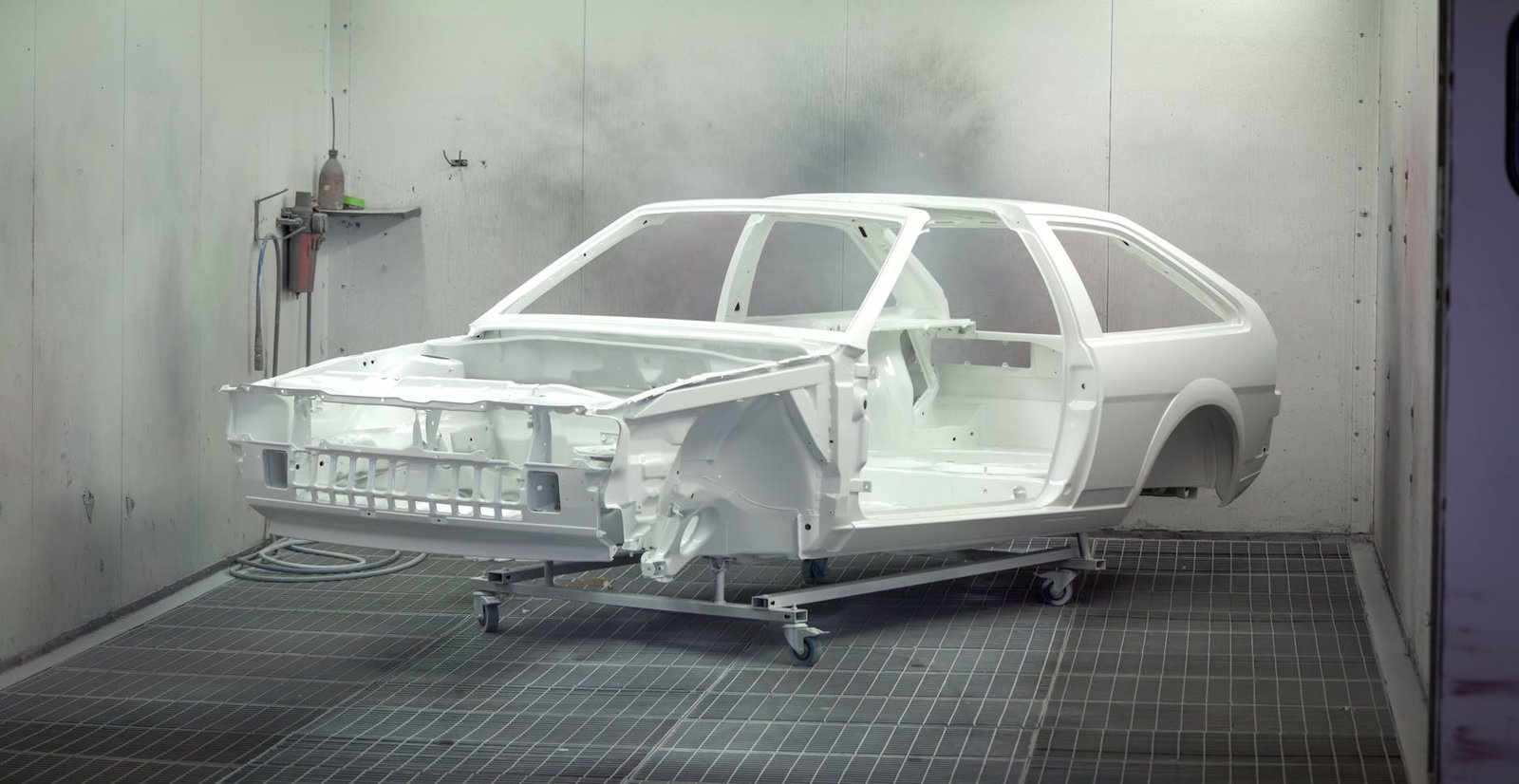
Picture a collision shop owner in Malden watching $400 a month vanish into a lead broker subscription that delivers tire-kickers and price shoppers. Meanwhile, a few miles away, drivers who just rear-ended someone on Route 60 are pulling up their insurance app, tapping the “find a repair shop” link, and choosing from a list the broker has nothing to do with. That gap, between where shop owners spend their marketing dollars and where customers actually start their search after a fender bender, is the most expensive blind spot in the local auto body industry right now.
Shops like Malden Autobody, which has served the community since 1947, and Today’s Collision on Washington Street are competing for that visibility through channels they own rather than rent. Insurance carrier referral pages, Google Maps, and review aggregators send qualified, ready-to-book customers who already know their deductible and just want a shop nearby that their adjuster trusts. The shops winning these searches did not get there by spending more on brokers. They got there by treating their website, Google Business Profile, and review pipeline as core operational assets.
This article walks through where drivers actually search after a collision, how the insurance carrier referral pipeline really works, why lead brokers are a losing long-term bet, and the practical steps a Medford or Malden shop can take to rank in Google, build review velocity, and capture insurance-related search intent without writing another broker check.
Where Drivers Actually Search After a Collision
The minutes after a fender-bender are not when most drivers run a careful comparison of body shops. They are stressed, often pulled onto the shoulder of Route 1 or sitting in a strip-mall parking lot, and they reach for the tools they already know: the insurance company’s mobile app, Google Maps, and whatever directory the next search surfaces first. Understanding the order of those clicks is the foundation of any honest marketing plan for a Medford or Malden body shop.
The Three-Tap Reality
The first tap is usually the insurer’s app. Carriers like Progressive push policyholders toward filing a claim immediately, and the claim flow surfaces repair options inside that experience before the driver has thought about choice at all. The second tap, for drivers who carry coverage through a smaller local agency such as an independent broker writing Malden auto policies, is a plain Google or Maps search for “auto body Malden” or “collision repair near me.” The third tap is a directory result: an aggregator page that has done the SEO work to sit at the top of that query.
Why Aggregators Outrank Independent Shops
Pull up that Google search and look at who actually owns the first screen. The Carwise listing of top auto body shops near Malden is built specifically to capture that “auto body + city” pattern, as is the Malden directory at Mass Auto Repair Shops, which presents itself as a comprehensive local list. Even a well-established multi-location operator like Today’s Collision in Malden competes against these directories, and a single-location shop’s own site frequently lands below all of them.
Aggregators win these searches for a structural reason: they publish hundreds of city-specific pages, each tightly themed to a “[city] auto body” pattern, and they accumulate links and review counts across that entire footprint. A single shop is fighting that with one homepage and a contact form.
Aggregator directories — pros and cons for a shop owner:
- Pros: Free or low-cost exposure on pages that already rank; some send genuinely qualified phone calls; a presence there signals legitimacy when an insurer or customer cross-checks you.
- Cons: You share the page with every competitor in town; the directory owns the reviews and the lead routing, not you; premium placement is monetized and the rules can change without notice.
What This Means for Your Shop
Consequently, the marketing question for a Medford or Malden body shop is not “should we be on directories” — most are, by default. The real question is where the next dollar goes. Spend everything chasing aggregator placement and you remain a tenant on someone else’s page. Ignore directories entirely and you cede the first screen of search results. The work that follows in this article focuses on a third option: owning your own organic placement on the searches that matter, so that when a driver taps past the insurance app and the directory list, your name is the first independent shop they see.
The Insurance Carrier Referral Pipeline
Before a customer ever types “auto body shop near me” into Google, a parallel referral pipeline is already at work. When a driver files a claim, the carrier’s adjuster app surfaces a curated list of network shops. That list is not random. It is the product of formal agreements between insurers and repairers, and understanding how those agreements function is the first step in deciding whether to compete for them or compete around them.
How Carrier Networks Actually Work
Carriers build these networks to control two variables at once: repair cost and customer experience. Progressive, for example, leans on its network as a retention play, telling policyholders directly that the company will guarantee repairs for as long as you own or lease your vehicle when the work is performed at one of its network shops. That guarantee is not a marketing flourish. It is a contractual promise the carrier can only make because the shop has agreed to specific labor rates, parts sourcing rules, cycle-time benchmarks, and warranty terms. For the shop, enrollment in a Direct Repair Program (DRP) means a steady inbound feed of assignments. For the carrier, it means predictable severity numbers and a controlled customer journey.
The Independence Tradeoff
DRP enrollment is not free money. The price is paid in pricing power and operational autonomy. Shops that join trade some control over labor rates, parts decisions, and supplement approvals in exchange for volume.
Pros of DRP enrollment
– Consistent claim volume routed directly from the carrier
– Reduced marketing cost per acquired job
– Carrier-backed warranty marketing that the shop can echo
Cons of DRP enrollment
– Capped or negotiated labor rates that may lag local market rates
– Pressure on cycle time and supplement frequency
– Dependence on a single referral channel that can be revoked
Notably, shops that build strong organic visibility can negotiate from a stronger position when a DRP contract comes up for review, because they are not betting the business on that one pipeline.
Location as Part of the Carrier Pitch
Carriers also weigh logistics. A shop that is genuinely convenient for the policyholder produces fewer rental days and fewer complaints. That is why operators like Today’s Collision in Malden lead with geography, positioning the facility near the Orange Line and at the meeting point of routes 1 and 93 as the company’s main location for North Shore customers. Furthermore, agency-facing pages such as the Derek Witham Insurance Agency overview of Malden auto coverage reinforce how local agents think about routing claims toward accessible shops their clients can reach without burning a half day.
What This Means for Your Shop
For a Medford or Malden operator weighing DRP enrollment against organic referral building, the realistic answer is rarely either-or. A DRP contract fills bays. Organic search builds the asset you actually own. Therefore, the strategic question is not whether to join a network, but how much of next year’s revenue you want tied to a contract you do not control. The remaining sections of this article focus on the half of the pipeline that is fully yours: the searches your future customers run on their own.
Why Lead Brokers Are a Losing Long-Term Bet
Lead brokers sell a simple promise: pay us per phone call or form fill, and we will fill your schedule. For a shop short on volume this week, the appeal is obvious. The problem is what the arrangement does to your business over twelve, twenty-four, and thirty-six months. You are renting demand instead of building it, and the rent goes up every quarter the broker can prove a competitor will pay more.
The shops that show up organically when a driver searches for collision repair in Malden or Medford are the ones treating search visibility as an owned asset. A listing on an aggregator such as the Carwise directory for Malden auto body shops or a profile on Mass Auto Repair Shops can deliver real traffic, but those listings live on someone else’s domain. The shops that compound year over year are the ones, like Malden Auto Body, that own a real website and a claimed Google Business Profile they actually update.
The Pros and Cons of Renting Versus Owning Your Pipeline
Paid lead brokers — pros:
- Volume on demand when bays are empty
- No upfront build cost
- Predictable per-unit pricing for forecasting
Paid lead brokers — cons:
- Every lead is shopped to three or four competitors simultaneously
- Margins compress because the customer is already comparing quotes
- Cost per acquisition rises as more shops join the network
- You build no equity in the channel — stop paying, leads stop
Owned search visibility — pros:
- One-time build cost, then near-zero marginal cost per lead
- Calls arrive without competing quotes attached
- The asset appreciates as reviews and content accumulate
Owned search visibility — cons:
- Takes three to six months to show meaningful results
- Requires consistent profile maintenance and review responses
The Math Stops Working Faster Than Operators Expect
Run the arithmetic on a typical broker arrangement. A shop paying a per-lead fee on fifteen referrals a month is spending money every single month, indefinitely, on traffic that never accrues to the shop’s own domain. Consequently, a one-time investment in a professional website, schema markup, and an optimized Google Business Profile usually pays back within the first year of operation, and every month after that is essentially free distribution.
Furthermore, the brokered-lead margin problem is structural, not cyclical. When a lead aggregator sells the same form submission to multiple shops, the consumer has already been primed to compare prices before any shop has spoken to them. That dynamic favors the lowest bidder, not the best repair. Therefore, the shop wins by being the first result the customer found on their own, not the third quote in their inbox.
Building a Shop Website That Ranks for Local Collision Searches
A shop website that earns insurance referrals does two jobs at once: it convinces a human driver that you handle their carrier’s paperwork, and it gives Google enough structured information to surface you when that driver types “auto body Malden” or “collision repair Medford” into their phone. Most shop sites fail at one or both. The good news is that the fix is mechanical, not creative, and a small owner-operator can execute it without a marketing retainer.
The Four Pages You Cannot Skip
Every Medford or Malden collision shop needs four cornerstone pages, and they should be linked from the primary navigation rather than buried in a footer. Specifically:
- A services page that names each repair category in plain English — collision repair, dent and scratch work, glass replacement, detailing. Directory listings already train customers to expect this phrasing, and aggregator sites like the Malden auto body directory at Mass Auto Repair Shops reinforce that vocabulary in search results.
- An insurance assistance page that lists carriers you work with and describes what “we handle the claim” actually means: estimate submission, supplement negotiation, rental coordination, direct billing.
- A location page with embedded Google Map, street address, hours, and driving directions from nearby landmarks. One page per physical location.
- A free estimate request form that captures name, phone, vehicle, and a photo upload field. Keep it under six fields. Every additional field cuts conversion.
Schema Markup Carriers and Google Can Actually Read
Schema markup is the invisible layer that tells search engines and insurance carrier referral tools what your business is. Use the AutoBodyShop type (a subtype of LocalBusiness) and populate openingHours, address, telephone, areaServed, and priceRange. Google’s own Search Central documentation is the canonical reference, but the practical effect is that your hours, services, and service radius become machine-readable. Carriers’ referral databases scrape this same structured data when matching claimants to nearby shops.
Pros of doing schema yourself:
– Zero recurring cost beyond your developer’s one-time setup
– Direct control over what fields appear in rich results
Cons:
– Easy to break with a careless theme update
– Requires testing through Google’s Rich Results tool after every deploy
Trust Signals That Lift Both Conversions and Rankings
Look at how established competitors present themselves. 1st Class Auto Body in East Boston opens its homepage with a lifetime warranty claim, an insurance company assistance line, and more than thirty years in business — three trust signals stacked above the fold. Notably, those same phrases work as keyword-rich content that Google reads as topical relevance. Therefore the design choice and the SEO choice are the same choice.
For owners building this without an agency, the Small Business Administration’s guidance on professional services marketing and Google’s Search Central documentation are the two free references worth bookmarking. Moreover, a developer who understands both can typically stand up the four core pages, schema, and a working estimate form inside a week, which is faster than the onboarding cycle for most lead-broker contracts you’d otherwise be signing.
Google Business Profile and Review Velocity as the Real Lead Engine
Search rankings get the click, but reviews close the deal. When an insurance customer in Medford or Malden lands on a results page and sees one shop with 1,796 reviews and a 5.0 rating sitting next to competitors with 30 or 40 reviews, the decision is usually made in under ten seconds. That profile-level review count is what 1st Class Auto Body in East Boston demonstrates — a number built over time that functions as both a ranking signal feeding the local pack and a conversion lever the moment a stressed driver compares options. Furthermore, insurance carriers like Progressive openly promote shops in their networks with a lifetime repair guarantee, which means your unaffiliated shop is competing against a trust shortcut already baked into the carrier’s own marketing. Reviews are how you neutralize that.
A Post-Repair Workflow That Stays Inside Google’s Guidelines
The fastest way to get a warning from Google is to bulk-request reviews, gate them behind a “are you happy?” filter, or offer a discount for posting one. None of that is necessary. The workflow that compounds without risk is simple: when the customer picks up the vehicle and signs the final paperwork, the service writer hands them a printed card with a short link and a QR code to the Google Business Profile review form, and follows up 48 hours later with one text message. No incentives, no filtering, no scripts beyond “If you have a minute, a quick note about your experience really helps other drivers find us.” Train every writer on the same handoff and the volume takes care of itself, because collision customers are emotionally relieved when they get their car back and that is the window in which they are most willing to write.
Claim the Directories That Already Rank
Your Google Business Profile is the main event, but the directories ranking above many independent shop websites for “auto body Malden” searches deserve claimed, completed listings too. The three to prioritize:
- Pros of claiming directory listings: free citations that reinforce NAP consistency, additional referral paths, and visibility on Carwise’s Malden auto body results where comparison shoppers land
- Cons: ongoing maintenance, occasional upsell pressure, and lower-quality leads than direct organic traffic
- Pros of Mechanic Advisor and Mass Auto Repair Shops listings: they often outrank independent shop sites for specific Malden and Medford terms, so a claimed listing captures traffic you’d otherwise lose
- Cons: the listings themselves don’t display Google reviews, so they’re a discovery channel rather than a trust channel
What This Means for a Shop Under 50 Reviews
Notably, the gap between 50 reviews and 1,796 reviews is not closed in a quarter, and pretending otherwise sets the wrong expectation. A shop processing 15 to 25 insurance jobs a week that asks every single customer can realistically add 6 to 10 reviews per month, which translates into roughly 100 new reviews per year. That is enough to move from “invisible in the three-pack” to “credible alternative” inside twelve months, especially when paired with the website structure covered earlier in this article. The actionable next step this week is to write the post-repair handoff script, print the cards, and put one person in charge of the 48-hour follow-up text. Therefore, what looks like a marketing initiative is really an operational one — and operations is something a small shop can change on Monday morning.
Local Content That Captures Insurance-Related Search Intent
The shops that win insurance referral searches without paying brokers do not get there by writing one generic homepage. They get there by publishing a deliberate set of pages that answer the questions drivers actually type into Google after an accident, and by giving each neighboring town a real reason to rank. A Medford shop competing against a Malden directory listing on Mass Auto Repair Shops is not going to outrank that page on the word “Malden” alone. It will outrank it on the long-tail searches that directory cannot answer, like whether the customer is required to use their insurer’s preferred shop or whether the facility can repair an aluminum-bodied truck.
Service-Area Pages That Read Like a Local, Not a Robot
A service-area page for Everett, Stoneham, or Medford should describe what driving from that town to the shop actually looks like, what the typical insurance interaction is, and what the customer should bring. It should not be the homepage with the town name swapped in five times. Furthermore, each page should reference the specific kinds of work the shop handles for that town’s vehicle mix — heavier on aluminum if the area skews newer trucks, heavier on bumper and panel work if it skews commuter sedans. Reference points like the listings on Carwise’s Malden directory are useful for understanding what competing shops emphasize and where the gaps are.
Explainers for the Questions Drivers Actually Search
Plain-language explainers are the single most underused content type in this category. A 600-word page titled “Do I Have to Use My Insurance Company’s Shop in Massachusetts?” can rank for years and quietly convert readers who were halfway down the funnel before they ever heard of the shop. Additionally, a page on aluminum repair capability matters because most independent shops cannot do it, and the ones that can — like Today’s Collision, whose 23,000 square foot facility includes a 3,000 square foot dedicated aluminum repair area — should say so plainly with photos. A rental car coordination explainer answers a question every claimant has and almost no shop writes about.
Pros and cons of leading with explainer content vs. service-area pages:
- Pros of explainers: Rank for evergreen long-tail queries, build trust before the first phone call, useful regardless of which town the customer lives in.
- Cons of explainers: Slower to convert on a per-page basis, require someone who can write plainly about insurance without sounding like a lawyer.
- Pros of service-area pages: Direct local ranking signal, easier to map to revenue per town.
- Cons of service-area pages: Easy to over-optimize, get penalized, or produce thin doorway pages if rushed.
A Realistic ROI Timeline
Therefore, expect organic traffic to begin replacing broker spend somewhere between months six and twelve, not month two. Pages need to be indexed, accumulate clicks, and earn position improvements before they pay for themselves. A shop publishing two well-researched explainers a month plus three serious service-area pages in the first quarter should expect meaningful organic call volume by quarter three, and a position where broker spend becomes optional — not mandatory — by the end of year one.
Need Help with Your Retail Website?
If you run a retail business and need a website that works seamlessly with your in-store operations, we’d be happy to discuss your specific needs. Monir Tech Solutions specializes in retail e-commerce and POS sync solutions for small businesses across the Boston area and beyond — including WooCommerce, Shopify, and in-store POS integration.
Reach out anytime at info@monirtechsolutions.com and we’ll respond within 24 hours.
The Bottom Line
Winning insurance referral searches in Medford and Malden is a compounding game: owned channels build equity that pays back for years, while broker leads stop the moment the credit card is declined. A shop’s website, Google Business Profile, carrier network pages, and authoritative directory listings are assets the business controls. Broker leads are rent. The shops that dominate these searches three years from now will be the ones that started treating organic visibility as infrastructure, not marketing.
What to internalize from this guide
A few takeaways are worth keeping front of mind. Carrier guarantees matter to customers and should be reflected on every relevant page — Progressive, for instance, guarantees network-shop repairs for as long as the customer owns or leases the vehicle, and naming that guarantee on a service page answers a real question searchers are typing in. Directory presence is non-negotiable: established aggregators like Carwise’s Malden auto body listings already rank for the queries you want, and being absent from them means ceding clicks to competitors who showed up first. Furthermore, the competitive reality in Malden and Medford is unforgiving for newer shops — multi-generational operators like Malden Autobody, serving the community since 1947, carry brand equity that newer shops simply cannot buy, only earn through patient search visibility, reviews, and useful content.
Your next step this week
Pick one afternoon in the next seven days and do three things in order.
- Claim or audit your Google Business Profile. Verify the address, hours, phone number, and primary category, then upload five recent repair photos.
- Confirm or create your listing on two directories that already rank locally — Carwise and a secondary aggregator such as Mass Auto Repair Shops. Make sure the name, address, and phone match your GBP exactly.
- Ask the next three satisfied customers, in person at pickup, to leave a Google review. Hand them a card with the direct review link.
Pros of starting with this checklist:
- Zero new spend, fits in a single afternoon, and produces signals Google indexes within days.
- Builds a foundation every later effort — service-area pages, carrier explainers, content publishing — depends on.
Cons to acknowledge:
- It will not replace broker volume in week one; the compounding effects take months.
- It requires the owner’s actual attention, not a delegated task to whoever answers the phone.
Consequently, the shop that finishes this checklist by next Friday is meaningfully ahead of the one still debating whether SEO is worth it.