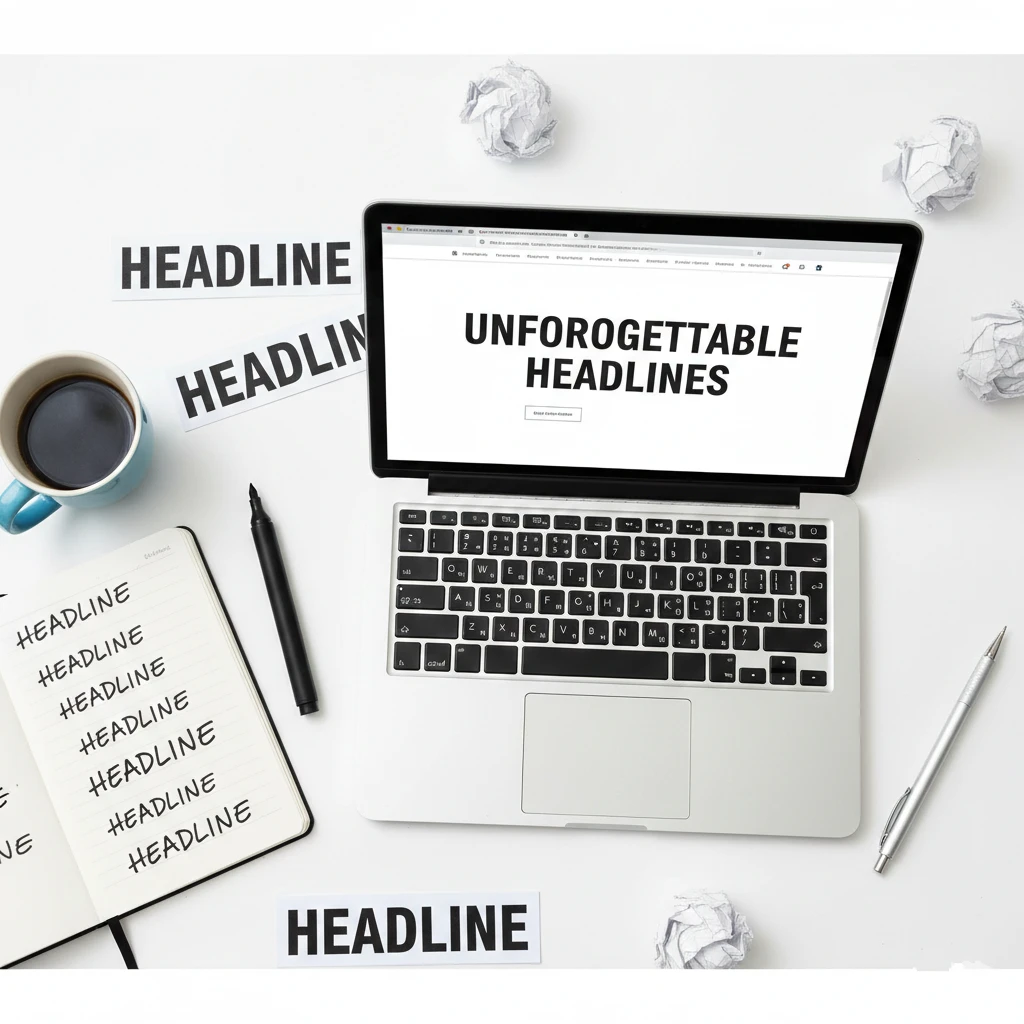
Learning how to write website headlines that work transforms your entire online presence dramatically. Headlines are the first words visitors read on every page. Furthermore, most people decide whether to stay or leave based on headlines alone.
Your headlines compete against countless distractions for visitor attention constantly. Social media notifications, other browser tabs, and short attention spans all work against you. Consequently, weak headlines lose visitors before they read anything else.
This guide shows you how to write website headlines that capture attention and drive action. You’ll learn proven formulas, psychological principles, and practical techniques that work.
Why Website Headlines Matter
Understanding headline importance motivates investment in crafting better ones. The impact extends across all website metrics significantly.
Headlines Determine First Impressions
Visitors form opinions about your website within milliseconds of arriving. Your headline creates the initial impression that shapes everything following. Furthermore, negative first impressions rarely recover unfortunately.
According to Copyblogger research, 80% of visitors read headlines while only 20% read body copy. Therefore, headlines deserve disproportionate attention and effort.
Headlines Affect Bounce Rates
Weak headlines send visitors away immediately without exploring further. They didn’t find what they expected or weren’t engaged enough. Consequently, bounce rates increase and conversions decrease.
Strong headlines promise value that makes visitors want to learn more. They create curiosity that pulls visitors deeper into your content.
Headlines Impact SEO Performance
Search engines display your headlines in search results prominently. Compelling headlines increase click-through rates from search results. Furthermore, Google considers headline relevance for ranking purposes.
Headlines containing relevant keywords help search engines understand page content. However, keyword stuffing damages both readability and rankings.
Headlines Drive Social Sharing
People share content based largely on headlines without reading fully. Compelling headlines get shared more frequently across social platforms. Consequently, great headlines expand your reach organically.
Social media feeds are crowded and competitive constantly. Only standout headlines earn clicks and shares.
Headlines Set Expectations
Your headline promises what visitors will receive from your content. Meeting those expectations builds trust and credibility. However, misleading headlines damage trust permanently.
Honest, accurate headlines that deliver on promises create loyal audiences. Clickbait tactics may work short-term but fail long-term.
Core Principles for Headlines That Work
Effective headlines share common characteristics regardless of context. Apply these principles consistently.
Be Specific and Clear
Vague headlines fail to communicate value effectively unfortunately. Specific headlines tell visitors exactly what they’ll get. Furthermore, specificity builds credibility through precision.
“Increase Website Traffic by 47% in 30 Days” beats “Improve Your Traffic” significantly. Numbers and timeframes add concrete specificity.
Communicate Clear Benefits
Visitors care about what they’ll gain, not what you offer directly. Benefit-focused headlines answer “What’s in it for me?” immediately. Therefore, translate features into visitor benefits always.
“Save 10 Hours Weekly” (benefit) outperforms “Automated Scheduling Tool” (feature) dramatically. Lead with what visitors actually care about.
Create Curiosity
Curiosity motivates visitors to read further and explore deeper. Headlines that hint at valuable information without revealing everything work well. However, avoid clickbait that frustrates with unfulfilled promises.
“The Surprising Reason Most Websites Fail” creates curiosity legitimately. Visitors want to discover the surprising reason.
Use Emotional Triggers
Emotions drive decisions more than logic typically does. Headlines that evoke feelings capture attention and motivate action. Furthermore, emotional connection makes content memorable.
Psychology research confirms emotional appeals outperform purely rational ones. Appeal to desires, fears, or aspirations appropriately.
Keep It Concise
Long headlines lose attention before delivering their message completely. Aim for six to twelve words typically for most headlines. Furthermore, front-load important words for scanners.
Every word must earn its place in limited headline space. Edit ruthlessly to remove unnecessary words.
How to Write Website Headlines That Work: Proven Formulas
These tested formulas provide starting points for effective headlines consistently.
The How-To Formula
“How to [Achieve Desired Outcome]” promises practical, actionable guidance clearly. This formula works excellently for educational and instructional content. Furthermore, it clearly communicates what visitors will learn.
Examples: “How to Double Your Email Subscribers” or “How to Create a Website That Converts”
The List Formula
“[Number] Ways to [Achieve Something]” promises organized, digestible content attractively. Lists appeal to scanners and feel manageable to consume. Furthermore, specific numbers increase credibility.
Odd numbers like 7, 9, and 11 tend to perform better than even ones surprisingly. Examples: “7 Ways to Improve Your Website Speed” or “11 Mistakes Killing Your Conversions”
The Question Formula
Questions engage visitors by prompting mental responses automatically. Effective questions address problems visitors actually have specifically. Furthermore, questions create dialogue feeling with readers.
Examples: “Is Your Website Driving Customers Away?” or “Why Aren’t Your Landing Pages Converting?”
The Negative Formula
“[Number] Mistakes That [Cause Bad Outcome]” leverages loss aversion effectively. People are more motivated to avoid pain than gain pleasure typically. Furthermore, negative headlines promise to help visitors avoid problems.
Examples: “5 Website Mistakes Costing You Customers” or “Why Your Headlines Aren’t Working (And How to Fix Them)”
The Ultimate Guide Formula
“The Ultimate Guide to [Topic]” promises comprehensive, authoritative content attractively. This formula works well for in-depth, long-form content specifically. Furthermore, it positions you as an expert.
Examples: “The Ultimate Guide to Small Business SEO” or “The Complete Guide to Website Optimization”
The Secret Formula
“The Secret to [Achieving Something]” promises insider knowledge exclusively. This formula leverages curiosity and desire for competitive advantage. However, ensure you deliver genuinely valuable insights.
Examples: “The Secret to Writing Headlines That Convert” or “What Top Marketers Know About Website Design”
Headlines That Work for Different Page Types
Different pages require different headline approaches specifically. Match your headlines to page purpose.
Homepage Headlines
Homepage headlines must communicate your core value proposition instantly. Visitors should understand what you do and why it matters immediately. Furthermore, they should motivate further exploration.
Focus on the primary benefit you provide to customers specifically. “We Help Small Businesses Get More Customers Online” is clearer than “Digital Marketing Solutions.”
Service Page Headlines
Service page headlines should name the service and primary benefit clearly. Visitors often arrive from navigation expecting specific information. Furthermore, headlines should address the problem you solve.
“Website Design That Converts Visitors Into Customers” combines service and benefit effectively. It tells visitors exactly what they’ll get.
Blog Post Headlines
Blog headlines must compete in crowded feeds and search results aggressively. They need to capture attention and promise valuable content specifically. Furthermore, they should contain relevant keywords naturally.
Use formulas like how-to, lists, and questions for blog posts commonly. These formats perform well for content marketing.
Landing Page Headlines
Landing page headlines must align with traffic source messaging precisely. Visitors expect consistency between ads and landing pages. Furthermore, headlines should emphasize the specific offer.
Match headline language to the ad or email that drove traffic specifically. Consistency improves conversions significantly.
About Page Headlines
About page headlines should focus on visitor benefits, not company history. “Why We’re the Right Choice for Your Project” engages better than “Our Company History” typically.
Make about pages about visitors as much as about your company. Frame your story through their benefit lens.
Writing Headlines That Work: Step-by-Step Process
Follow this process to craft effective headlines systematically every time.
Step 1: Identify Your Goal
What do you want visitors to do after reading this headline specifically? Clear goals guide headline direction and word choice. Furthermore, different goals require different approaches.
Lead generation headlines differ from sales headlines significantly. Know your objective before writing.
Step 2: Know Your Audience
Who will read this headline and what do they care about specifically? Understanding audience needs shapes benefit-focused messaging. Furthermore, audience knowledge informs language and tone choices.
Write headlines for your actual audience, not yourself. Their perspective matters most.
Step 3: List Key Benefits
What benefits does your content or offer provide readers specifically? List all benefits before choosing which to feature. Furthermore, identify the single most compelling benefit.
Lead with the strongest benefit for maximum impact. Secondary benefits can appear in subheadlines or body copy.
Step 4: Write Multiple Versions
Never settle for your first headline attempt prematurely. Write at least ten different headlines before choosing. Furthermore, try different formulas and approaches.
Quantity leads to quality in headline writing specifically. More options provide better choices.
Step 5: Apply Power Words
Incorporate words that trigger emotional responses and action. “Free,” “New,” “Secret,” “Proven,” and “Discover” all perform well. However, use them authentically and appropriately.
Buffer’s research identifies high-performing headline words specifically. Study and apply these findings.
Step 6: Edit for Clarity and Length
Remove unnecessary words that don’t add value specifically. Ensure your headline communicates clearly to strangers. Furthermore, check that important words appear early.
Read headlines aloud to test flow and impact. Awkward phrasing becomes obvious when spoken.
Step 7: Test and Refine
Headlines should be tested whenever possible systematically. A/B test different versions to find winners. Furthermore, apply learnings to future headlines.
Data beats opinion for headline optimization always. Test rather than guess.
Power Words for Headlines That Work
Certain words consistently improve headline performance measurably. Use these strategically.
Urgency Words
Words creating time pressure motivate immediate action effectively. “Now,” “Today,” “Limited,” “Hurry,” and “Last Chance” all create urgency. However, use genuine urgency only.
Urgency words work best for time-sensitive offers specifically. Don’t fabricate false deadlines.
Exclusivity Words
Words suggesting special access appeal to desire for privilege. “Secret,” “Exclusive,” “Insider,” “Members-Only,” and “Private” all work well. Furthermore, they imply valuable, rare information.
Exclusivity words promise content visitors can’t find elsewhere. Deliver on this promise.
Safety Words
Words reducing perceived risk encourage hesitant visitors effectively. “Guaranteed,” “Proven,” “Risk-Free,” “Safe,” and “Certified” build confidence. They address concerns about trying something new.
Safety words work especially well near CTAs and offers. They overcome last-minute hesitation.
Curiosity Words
Words creating information gaps motivate continued reading naturally. “Surprising,” “Strange,” “Little-Known,” “Hidden,” and “Revealed” all create curiosity. Furthermore, they promise discoveries.
Curiosity words work excellently for blog post headlines specifically. They encourage clicks from search and social.
Value Words
Words communicating tangible benefit attract attention immediately. “Free,” “Save,” “Bonus,” “Instant,” and “Easy” all promise value. Furthermore, they answer “What’s in it for me?”
Value words work particularly well for offers and lead magnets. They emphasize what visitors receive.
Common Headline Mistakes to Avoid
Many businesses undermine headline effectiveness through these errors. Learn from their mistakes.
Being Too Clever
Clever wordplay often confuses rather than engages visitors unfortunately. Puns and jokes may entertain but fail to communicate value. Therefore, prioritize clarity over creativity.
If visitors must decode your headline, you’ve lost them already. Clear beats clever every time.
Making It About You
Headlines focused on your company rather than visitors fail typically. Visitors care about themselves, not your achievements. Therefore, frame everything through visitor benefit.
“We’re Award-Winning Designers” matters less than “Get a Website That Wins Customers.” Focus outward, not inward.
Being Vague
Generic headlines that could apply to anyone fail to stand out. “Quality Services for Your Business” says nothing specifically. Furthermore, vagueness suggests you don’t understand visitor needs.
Specificity demonstrates expertise and relevance clearly. The more specific, the more compelling typically.
Overpromising
Headlines making claims you can’t deliver damage trust permanently. Visitors who feel deceived won’t return or recommend you. Therefore, promise only what you can deliver.
Realistic headlines that deliver build long-term audience relationships. Short-term clicks aren’t worth long-term reputation damage.
Keyword Stuffing
Cramming keywords into headlines damages readability severely unfortunately. Search engines recognize and penalize this practice now. Furthermore, human readers find it awkward and off-putting.
Include keywords naturally where they fit appropriately. Never sacrifice readability for keyword inclusion.
Ignoring Mobile Display
Long headlines get truncated on mobile devices and search results. Important words cut off may never be seen. Therefore, front-load key information.
Test how headlines display across different contexts specifically. Ensure crucial words always appear.
Testing Website Headlines That Work
Optimization through testing improves headline performance continuously. Apply these testing strategies.
A/B Test Systematically
A/B testing compares two headline versions to identify the winner. Test one variable at a time for clear conclusions. Furthermore, run tests until statistically significant.
Google Optimize offers free A/B testing capabilities helpfully. Test headlines on key pages regularly.
Test in Email Subject Lines
Email subject lines function similarly to headlines fundamentally. Test headline variations as email subjects for quick data. Furthermore, email testing provides faster results than website testing.
High-performing subject lines often make excellent page headlines too. Use email as a testing ground.
Analyze Search Console Data
Google Search Console shows which headlines attract clicks from search results. Compare click-through rates for different page headlines. Furthermore, identify underperforming headlines needing improvement.
Low click-through rates despite good rankings indicate headline problems. Better headlines capture more search traffic.
Use Headline Analyzer Tools
CoSchedule’s Headline Analyzer scores headlines and provides improvement suggestions. These tools offer quick feedback during writing. Furthermore, they catch common problems automatically.
Use analyzers as guides rather than absolute authorities though. Human judgment remains essential.
Monitor Engagement Metrics
Track how headlines affect time on page, bounce rate, and conversions. Strong headlines keep visitors engaged longer typically. Furthermore, headline changes should improve these metrics.
Compare metrics before and after headline improvements specifically. Data validates your changes.
Headlines That Work Across Marketing Channels
Headlines appear beyond your website across multiple channels. Apply these principles consistently.
Social Media Headlines
Social feeds are crowded and attention spans are short extremely. Social headlines must capture attention instantly and completely. Furthermore, they should encourage clicks to your website.
Emotional and curiosity-driven headlines perform well on social platforms. Test different approaches for your audience.
Email Subject Lines
Subject lines determine whether emails get opened at all. Apply headline principles to every email subject line. Furthermore, keep subject lines under 50 characters for mobile display.
Personalization and urgency work well in email specifically. Test continuously to improve open rates.
Meta Titles
Meta titles appear in search results as clickable headlines directly. They must contain keywords while remaining compelling to humans. Furthermore, they should stay under 60 characters.
Meta titles affect both rankings and click-through rates significantly. Optimize both elements simultaneously.
Ad Headlines
Advertising headlines must capture attention and communicate value instantly. They compete against other ads and organic content simultaneously. Furthermore, they must align with landing page messaging.
Test multiple ad headline variations to find winners specifically. Small improvements dramatically affect advertising ROI.
The Bottom Line
Learning how to write website headlines that work transforms your marketing results dramatically. Headlines determine whether visitors engage or leave immediately. Furthermore, they affect SEO, social sharing, and conversion rates significantly.
Start by auditing your current headlines across your website thoroughly. Identify weak headlines using vague language or missing benefits specifically. Then apply the principles and formulas from this guide systematically.
Remember that headline writing improves with practice and testing continuously. Study headlines that capture your attention and analyze why. Apply those lessons to your own headline writing.
Your competitors are likely improving their headlines already actively. Therefore, improving yours should become an immediate priority for your business. Start writing better headlines today and watch engagement improve.
Need help writing headlines that convert? Get a free quote or contact us to discuss your website copywriting needs.