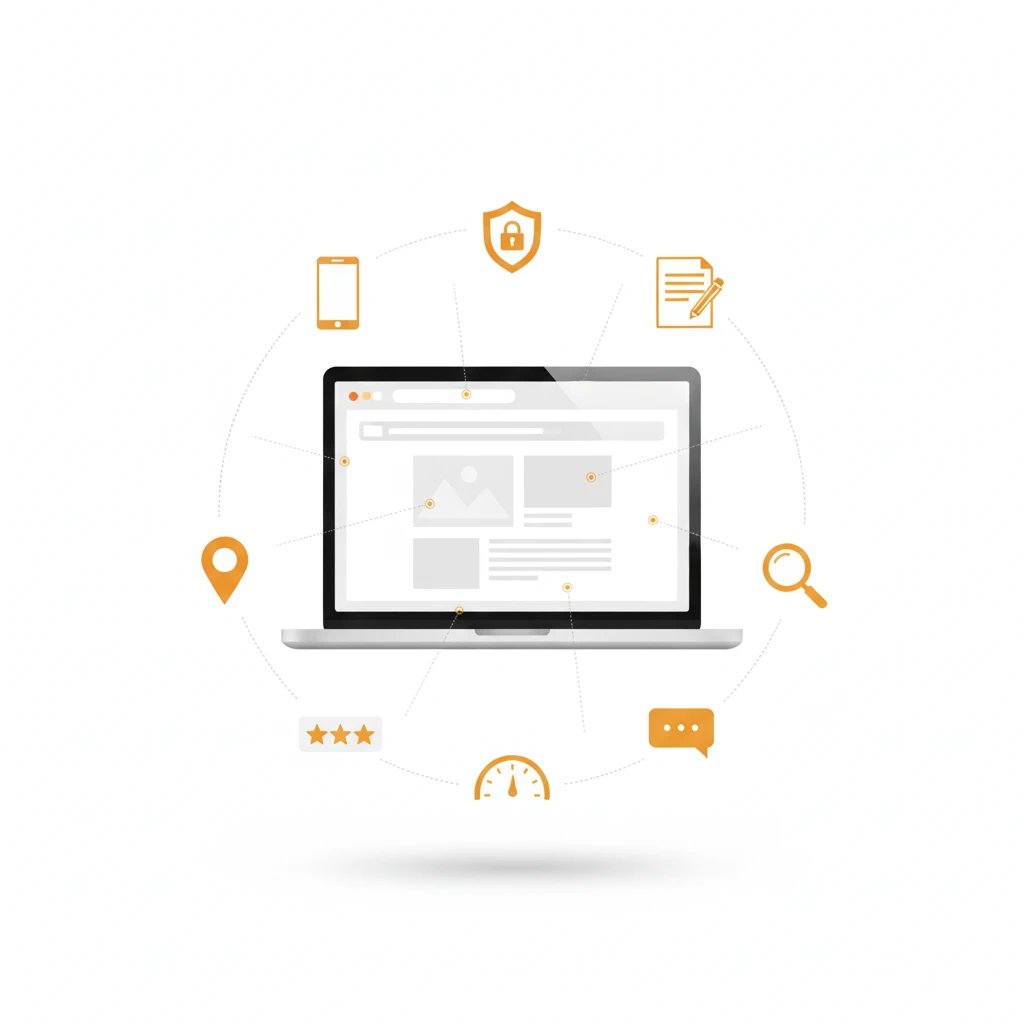
Your website is your digital storefront. Just like a physical store needs certain essentials—good lighting, clear signage, a way to pay—your website needs specific features to convert visitors into customers.
Missing even one of these small business website features could be costing you leads and sales. Here’s your complete checklist.
1. Mobile-Responsive Design
More than 60% of web traffic comes from mobile devices. If your website doesn’t work perfectly on phones and tablets, you’re invisible to most of your potential customers.
Mobile-responsive design means your website automatically adjusts to fit any screen size. Text remains readable, buttons stay tappable, and navigation works smoothly.
How to check: Pull out your phone and browse your website. Can you read everything without zooming? Can you tap buttons without hitting the wrong one? Does the menu work properly?
Why it matters: Google prioritizes mobile-friendly websites in search results. A poor mobile experience hurts both user experience and SEO.
2. Fast Loading Speed
Every second counts. Studies show that 40% of visitors abandon websites that take longer than 3 seconds to load. For every additional second, conversion rates drop by 7%.
Slow websites frustrate visitors before they even see your content. They also rank lower in Google search results.
How to check: Use Google PageSpeed Insights (free) to test your site. Aim for a score of 80+ on mobile.
Common fixes:
- Compress and optimize images
- Use quality hosting
- Minimize plugins and scripts
- Enable browser caching
3. Clear Contact Information
You’d be amazed how many business websites hide their contact information. Every page should make it easy for visitors to reach you.
Essential contact elements:
- Phone number (click-to-call on mobile)
- Email address
- Physical address (if applicable)
- Business hours
- Contact form
Best placement: Header, footer, and dedicated contact page. Your phone number should be visible without scrolling on every page.
4. Compelling Call-to-Action Buttons
What do you want visitors to do? Call you? Request a quote? Book an appointment? Your website needs clear, prominent buttons that guide visitors toward action.
Effective CTAs include:
- “Get a Free Quote”
- “Schedule a Consultation”
- “Call Now”
- “Book Online”
- “Shop Now”
Best practices:
- Use contrasting colors that stand out
- Place CTAs above the fold (visible without scrolling)
- Use action-oriented language
- Include CTAs on every page
5. SSL Security Certificate
If your website URL shows “Not Secure” instead of a padlock icon, you’re losing customers immediately. Browsers now warn visitors about insecure sites, which destroys trust.
SSL encrypts data between your website and visitors. It’s essential for:
- Customer trust
- Google rankings (SSL is a ranking factor)
- Protecting any data collected
- Processing payments
How to get it: Most hosting providers offer free SSL certificates. If yours doesn’t, ask them to enable it or consider switching hosts.
6. About Page That Builds Trust
People buy from businesses they trust. Your About page is where you build that trust by showing the humans behind the company.
What to include:
- Your story and why you started
- Team photos and bios
- Years of experience
- Credentials and certifications
- Awards or recognition
- Your mission and values
Avoid: Generic stock photos and corporate jargon. Authenticity builds trust better than polished perfection.
7. Customer Testimonials and Reviews
Social proof is powerful. When potential customers see others praising your business, they’re more likely to trust you.
Ways to display testimonials:
- Dedicated testimonials page
- Rotating testimonials on homepage
- Service-specific reviews on service pages
- Integration with Google Reviews
- Video testimonials (most powerful)
Best practices:
- Include customer name and photo (with permission)
- Mention specific results when possible
- Keep testimonials recent and relevant
- Don’t fake them—ever
8. Easy Navigation
Visitors should find what they need within seconds. Confusing navigation frustrates users and increases bounce rates.
Navigation essentials:
- Clear, descriptive menu labels
- Logical page hierarchy
- No more than 7 main menu items
- Working search function (for larger sites)
- Breadcrumbs for deeper pages
Test it: Ask someone unfamiliar with your business to find specific information. Watch where they struggle.
9. Service or Product Pages
Your homepage shouldn’t do all the work. Each service or product deserves its own dedicated page with detailed information.
What to include on service pages:
- Clear description of what you offer
- Benefits to the customer
- Pricing (or pricing factors)
- Process or what to expect
- FAQs specific to that service
- Call-to-action to get started
Why it matters: Dedicated pages rank better in search engines and give visitors the detailed information they need to make decisions.
10. Analytics and Tracking
You can’t improve what you don’t measure. Website analytics show you how visitors find and use your site, so you can make data-driven improvements.
Essential tracking:
- Google Analytics 4 (free)
- Google Search Console (free)
- Conversion tracking for forms and calls
- Heatmaps (optional but valuable)
Key metrics to monitor:
- Traffic sources
- Most popular pages
- Bounce rate
- Time on site
- Conversion rate
Bonus Features Worth Considering
Once you have the essentials, these features can further improve your website:
Live Chat: Engage visitors in real-time and capture leads after hours with chatbots.
Blog/Resources Section: Attract organic traffic and demonstrate expertise with helpful content.
FAQ Page: Answer common questions and reduce repetitive inquiries.
Online Booking/Scheduling: Let customers book appointments without phone calls.
Social Media Integration: Connect your website to your social presence.
Email Newsletter Signup: Build a list for ongoing marketing.
Quick Audit Checklist
Use this checklist to audit your current website:
- Mobile-responsive on all devices
- Loads in under 3 seconds
- Contact info visible on every page
- Clear call-to-action buttons
- SSL certificate (padlock icon)
- Compelling About page
- Customer testimonials displayed
- Easy, intuitive navigation
- Dedicated service/product pages
- Analytics tracking installed
Score yourself:
- 9-10: Excellent foundation
- 7-8: Good, but room for improvement
- 5-6: Missing important elements
- Below 5: Needs immediate attention
The Bottom Line
These ten features aren’t optional extras—they’re the foundation of an effective small business website. Missing even a few can significantly impact your ability to convert visitors into customers.
The good news? Most of these features are straightforward to implement. Start with the basics—mobile responsiveness, speed, and clear contact information—then build from there.
Your website is often the first impression potential customers have of your business. Make sure it has everything it needs to convert that impression into action.
Not sure if your website has what it needs? Get a free website audit and we’ll show you exactly what’s working and what needs improvement.