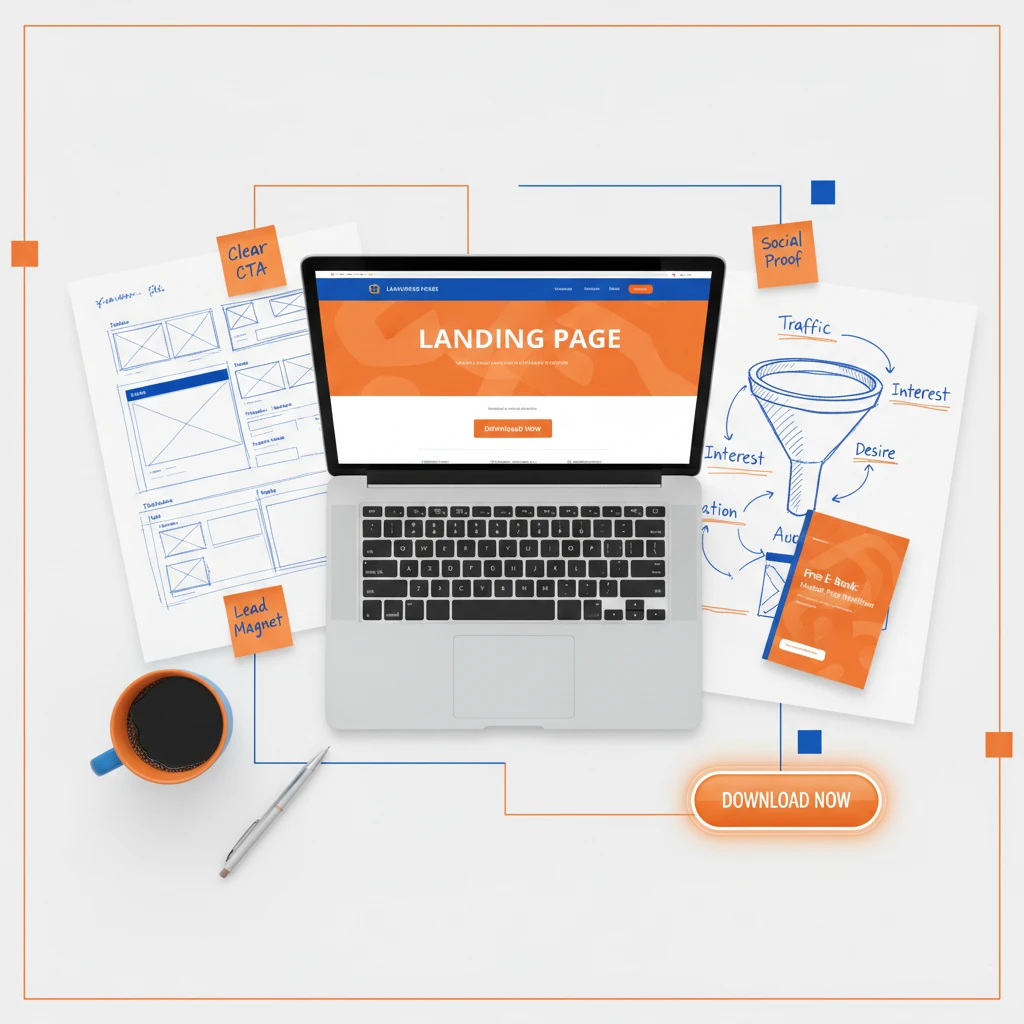
Creating effective landing pages converts visitors into leads and customers consistently. Unlike regular website pages, landing pages have one specific goal and eliminate distractions. Consequently, they achieve higher conversion rates than standard pages typically.
Many small businesses send traffic to their homepage and wonder why conversions are low. Homepages serve multiple purposes and audiences simultaneously. However, effective landing pages focus visitors on a single action with laser precision.
This guide shows you how to create effective landing pages that drive real business results. You’ll learn the essential elements, design principles, and optimization strategies that work.
Why Landing Pages Matter for Small Business
Understanding landing page importance justifies investment in creating them properly. The benefits extend across multiple marketing channels.
Landing Pages Increase Conversions
Dedicated landing pages convert significantly better than generic website pages. HubSpot research shows companies with 30+ landing pages generate 7x more leads. Therefore, creating more landing pages directly increases results.
Focused messaging matched to visitor intent improves conversion rates dramatically. Visitors find exactly what they expected after clicking.
They Improve Advertising ROI
Sending paid traffic to your homepage wastes advertising budget unfortunately. Visitors must navigate and search for relevant content frustratingly. Consequently, many leave without converting.
Effective landing pages match ad messaging precisely and perfectly. This alignment improves quality scores and reduces cost per acquisition significantly.
Landing Pages Enable Testing
Testing improvements on your homepage risks disrupting overall site experience. However, landing pages provide isolated testing environments safely. Therefore, you can experiment aggressively without consequences.
A/B testing landing pages reveals what resonates with your audience specifically. These insights improve marketing effectiveness continuously.
They Support Multiple Campaigns
Different campaigns target different audiences with different messages naturally. Each campaign deserves a dedicated landing page matching its specific messaging. Consequently, you can run multiple campaigns simultaneously effectively.
One-size-fits-all approaches underperform compared to targeted landing pages consistently. Relevance drives conversions.
Landing Pages Capture Lead Information
Unlike regular pages, landing pages typically include lead capture forms prominently. They exchange valuable content for visitor contact information directly. Therefore, they build your marketing database systematically.
Marketo research confirms landing pages are essential for lead generation. They’re the workhorses of inbound marketing.
Essential Elements of Effective Landing Pages
Every high-converting landing page includes these critical components. Missing elements reduce conversion potential significantly.
Compelling Headline
Your headline is the first thing visitors see and read. It must grab attention and communicate value immediately. Furthermore, it should match the ad or link that brought visitors.
Effective headlines address visitor problems or promise specific benefits clearly. “Get More Leads While You Sleep” beats “Our Services” significantly.
Keep headlines concise and impactful consistently. Long headlines lose attention before delivering the message.
Supporting Subheadline
Subheadlines expand on your headline’s promise with additional detail. They provide context that headlines alone can’t communicate fully. Furthermore, they keep visitors reading downward.
Use subheadlines to address secondary benefits or overcome objections. They support the main message without overwhelming it.
Hero Image or Video
Visual content captures attention faster than text alone typically. Hero images should reinforce your message and show your offer. Furthermore, they create emotional connection with visitors.
EyeQuant research shows visitors process images 60,000 times faster than text. Use this advantage strategically.
Videos can increase conversions by 86% according to some studies. Consider video for complex offers requiring explanation.
Clear Value Proposition
Visitors need to understand what they’ll get and why it matters immediately. Your value proposition explains the benefit clearly and specifically. Furthermore, it differentiates your offer from alternatives.
Answer the visitor’s question: “What’s in it for me?” directly. Benefits matter more than features for landing pages.
Benefit-Focused Copy
Landing page copy should emphasize benefits over features consistently. Features describe what something is objectively. Benefits explain why visitors should care personally.
“Save 10 hours per week” (benefit) beats “Automated scheduling system” (feature) significantly. Translate every feature into visitor benefit.
Keep copy scannable with short paragraphs and bullet points. Most visitors scan rather than read thoroughly.
Social Proof
Testimonials, reviews, and trust badges reduce conversion anxiety effectively. Visitors trust other customers more than your marketing claims. Therefore, include social proof prominently.
Specific testimonials with names and photos work best typically. “Increased leads by 47%” beats “Great service!” considerably.
Strong Call to Action
Your CTA tells visitors exactly what to do next specifically. Use action-oriented language that motivates clicks immediately. Furthermore, make CTAs visually prominent and impossible to miss.
“Get My Free Guide” outperforms “Submit” dramatically. Benefit-focused CTAs increase click-through rates significantly.
Lead Capture Form
Forms collect the information you need to follow up effectively. However, every field reduces completion rates measurably. Therefore, ask only for essential information initially.
Name and email suffice for most lead generation purposes. Additional qualification can happen during follow-up conversations.
Trust Indicators
Security badges, guarantees, and credentials build confidence effectively. Visitors need reassurance before sharing information or purchasing. Therefore, display trust elements near forms and CTAs.
“100% Satisfaction Guaranteed” and “Your information is secure” address common concerns. These phrases reduce friction significantly.
How to Create Effective Landing Pages: Step by Step
Follow this process to create landing pages that convert consistently.
Step 1: Define Your Goal
Every landing page needs one specific, measurable goal clearly. Lead capture, product purchase, or appointment booking are common goals. However, multiple goals dilute focus and reduce conversions.
Write your goal as a specific action visitors should take. “Download the free guide” is clearer than “engage with our content.”
Step 2: Understand Your Audience
Who will visit this landing page and what do they want specifically? Understanding visitor intent shapes every element of your page. Furthermore, audience research prevents assumptions that hurt conversions.
Consider where visitors come from and what messaging brought them. Match your landing page to their expectations precisely.
Step 3: Craft Your Value Proposition
What unique value does your offer provide to visitors specifically? Your value proposition should be clear, compelling, and differentiated. Furthermore, it should be communicable in one sentence.
Test your value proposition with people unfamiliar with your business. If they don’t immediately understand, revise it.
Step 4: Write Compelling Copy
Start with your headline and work downward systematically. Every sentence should support your goal and move visitors toward action. Furthermore, eliminate anything that doesn’t serve this purpose.
Write in second person using “you” and “your” extensively. This approach feels personal and relevant to visitors.
Step 5: Design for Conversion
Visual design should guide visitors toward your CTA naturally. Use visual hierarchy to emphasize important elements appropriately. Furthermore, eliminate distractions that pull attention away.
White space helps important elements stand out clearly. Cluttered designs confuse and overwhelm visitors.
Step 6: Create Your Form
Design forms that balance information needs with completion ease. Start with minimal fields and add only what’s truly necessary. Furthermore, use appropriate field types for better mobile experience.
Consider multi-step forms for longer requirements. Breaking forms into steps improves completion rates.
Step 7: Add Social Proof
Select testimonials and proof points that support your specific offer. Generic praise helps less than specific results do. Furthermore, match social proof to visitor concerns.
Place social proof near your form to address last-minute hesitation. It provides reassurance at the critical moment.
Step 8: Test and Optimize
Launch your landing page and monitor performance closely initially. Identify underperforming elements through data analysis carefully. Then test improvements systematically over time.
Continuous optimization compounds into significant improvements eventually. Never consider landing pages “finished” entirely.
Effective Landing Page Design Principles
Visual design significantly impacts landing page performance measurably. Apply these principles consistently.
Maintain Visual Hierarchy
Guide visitors through your page in the intended order deliberately. Size, color, and position create hierarchy that directs attention. Furthermore, hierarchy ensures visitors see important elements first.
Your headline should be the largest text element typically. CTAs should stand out through color contrast prominently.
Use Directional Cues
Guide visitors toward your CTA using visual cues strategically. Arrows, images of people looking toward CTAs, and layout flow all help. Consequently, visitors naturally find your call to action.
Eye-tracking studies reveal how visitors scan pages. Use this knowledge to position elements strategically.
Choose Colors Strategically
Color affects emotions and actions psychologically and measurably. CTA buttons should contrast strongly with surrounding colors. Furthermore, color schemes should align with your brand.
Test different CTA colors to find what converts best specifically. Orange and green often perform well, but testing reveals your optimal choice.
Ensure Mobile Responsiveness
Over 60% of traffic comes from mobile devices currently. Landing pages must work perfectly on all screen sizes. Therefore, design mobile-first or test mobile thoroughly.
Mobile visitors need larger buttons and simpler layouts typically. What works on desktop may fail on phones.
Minimize Distractions
Remove navigation, sidebars, and unnecessary links entirely. Every element that doesn’t support conversion is a potential distraction. Therefore, ruthlessly eliminate non-essential elements.
Single-focus pages convert better than cluttered alternatives consistently. Less truly is more for landing pages.
Keep Forms Visible
Your form should be visible without excessive scrolling ideally. Visitors shouldn’t hunt for how to take action. Furthermore, long scrolls before forms lose impatient visitors.
Consider sticky CTAs that remain visible during scrolling. This ensures action is always accessible.
Landing Page Copy That Converts
Words matter enormously on landing pages specifically. Apply these copywriting principles.
Lead with Benefits
Open with the biggest benefit visitors will receive clearly. Don’t make them wait or work to find value. Furthermore, benefits should be specific and compelling.
“Double Your Leads in 30 Days” grabs attention immediately. Generic promises like “Improve your marketing” don’t.
Address Objections
Anticipate reasons visitors might hesitate to convert. Address these concerns directly within your copy. Consequently, you remove barriers before they stop conversions.
“No credit card required” addresses cost concerns proactively. “Cancel anytime” reduces commitment anxiety effectively.
Use Power Words
Certain words trigger emotional responses and motivate action. “Free,” “New,” “Proven,” “Guaranteed,” and “Instant” all perform well. However, use them authentically and appropriately.
Buffer’s research identifies high-converting words specifically. Study and apply these findings.
Create Urgency Appropriately
Urgency motivates immediate action rather than procrastination. Limited time offers, countdown timers, and scarcity all work. However, fake urgency damages trust when recognized.
“Offer ends Friday” creates genuine urgency legitimately. Use real deadlines rather than fabricated ones.
Keep It Scannable
Most visitors scan rather than read thoroughly completely. Use short paragraphs, bullet points, and bold text strategically. Furthermore, important messages should be visible while scanning.
Front-load important information in paragraphs consistently. Visitors often read only the first sentence.
Creating Effective Landing Pages for Different Goals
Different objectives require different landing page approaches specifically.
Lead Generation Pages
Lead generation pages exchange valuable content for contact information. The offer must be compelling enough to justify sharing email addresses. Furthermore, forms should be as short as possible.
E-books, guides, templates, and webinars make excellent lead magnets. Ensure your offer provides genuine value.
Click-Through Pages
Click-through pages warm visitors before sending them to conversion pages. They provide information and build desire before the ask. E-commerce sites often use them before checkout.
These pages reduce friction by educating before requesting action. Pre-sold visitors convert at higher rates.
Sales Pages
Sales pages convince visitors to purchase products or services directly. They’re typically longer than lead generation pages necessarily. Furthermore, they address more objections comprehensively.
Long-form sales pages work well for expensive or complex offerings. Visitors need more information before significant commitments.
Event Registration Pages
Event pages drive registrations for webinars, workshops, or conferences. They emphasize date, time, and event value prominently. Furthermore, they create urgency around limited spots.
Include speaker credentials and agenda highlights prominently. Social proof from past events helps considerably.
Thank You Pages
Thank you pages appear after conversion completion importantly. They confirm success and set expectations clearly. Furthermore, they provide opportunities for additional engagement.
Include next steps, related offers, or social sharing options strategically. Don’t waste this high-engagement moment.
Common Landing Page Mistakes to Avoid
Many businesses undermine landing page effectiveness through these errors. Learn from their mistakes.
Too Many Goals
Landing pages with multiple CTAs confuse visitors about what to do. They can’t decide and often do nothing as a result. Therefore, focus on one goal per page strictly.
If you need multiple goals, create multiple landing pages instead. Each page serves one purpose specifically.
Mismatched Messaging
Landing pages that don’t match the ads driving traffic disappoint visitors. They expected one thing and found another unfortunately. Consequently, they leave immediately.
Ensure headline, offer, and messaging align with traffic sources perfectly. Consistency builds trust and improves conversions.
Too Much Text
Walls of text overwhelm and intimidate visitors unnecessarily. They won’t read everything you wrote regardless. Therefore, edit ruthlessly and keep copy concise.
If extensive information is necessary, use progressive disclosure techniques. Reveal more only for visitors who want it.
Weak or Hidden CTAs
CTAs that blend into page design get overlooked entirely. Visitors shouldn’t search for how to convert. Furthermore, weak CTA copy fails to motivate action.
Make CTAs impossible to miss visually prominently. Use compelling action-oriented language always.
Slow Loading Pages
Slow pages lose visitors before they even see your content. Google research shows 53% leave after 3 seconds. Therefore, optimize landing page speed aggressively.
Compress images, minimize code, and use fast hosting specifically. Speed matters enormously for landing page success.
No Social Proof
Landing pages without testimonials or trust indicators face skepticism. Visitors wonder if your claims are legitimate honestly. Therefore, include social proof prominently.
Even a few testimonials significantly impact conversion rates positively. Something beats nothing considerably.
Testing and Optimizing Landing Pages
Continuous improvement maximizes landing page performance over time. Apply these optimization strategies.
A/B Test Systematically
A/B testing compares two versions to determine which converts better. Test one element at a time for clear conclusions. Furthermore, run tests until statistically significant.
Google Optimize offers free A/B testing capabilities helpfully. Alternatively, Optimizely provides advanced features.
Test Headlines First
Headlines have the biggest impact on landing page performance typically. Test different headline approaches before other elements. Small headline changes can dramatically impact results.
Try benefit-focused versus curiosity-driven headlines specifically. Data reveals what resonates with your audience.
Optimize Forms Continuously
Form length and fields significantly affect completion rates measurably. Test shorter forms against longer ones specifically. Furthermore, test field order and labels.
Even small form improvements compound into significant lead increases. Forms deserve ongoing optimization attention.
Monitor Key Metrics
Track conversion rate, bounce rate, and time on page consistently. These metrics reveal landing page health clearly. Furthermore, compare performance across traffic sources.
Set up conversion tracking in Google Analytics properly. Data drives intelligent optimization decisions.
Learn from Heatmaps
Heatmap tools show where visitors click, scroll, and focus attention. They reveal what’s working and what’s being ignored. Furthermore, they identify unexpected behavior patterns.
Hotjar and similar tools provide heatmap capabilities affordably. Visual data complements numerical analytics.
Landing Page Tools and Resources
These tools help create effective landing pages efficiently.
Landing Page Builders
Unbounce: Dedicated landing page builder with excellent templates and testing capabilities specifically.
Leadpages: User-friendly builder with conversion-focused templates and features included.
Instapage: Advanced personalization and collaboration features for teams specifically.
Elementor: WordPress page builder with landing page templates available.
Testing and Analytics
Google Optimize: Free A/B testing tool integrating with Google Analytics seamlessly.
Hotjar: Heatmaps, recordings, and surveys for understanding visitor behavior.
Crazy Egg: Visual analytics showing where visitors click and scroll specifically.
Stock Images and Graphics
Unsplash: High-quality free stock photos for landing page visuals.
Canva: Easy graphic design tool for creating landing page images.
Lottie: Animated illustrations that add visual interest effectively.
The Bottom Line
Creating effective landing pages transforms your marketing results dramatically. Focused pages with single goals convert visitors at much higher rates consistently. Furthermore, they improve advertising ROI significantly.
Start by identifying your most important conversion goal specifically. Create a dedicated landing page matching traffic source messaging precisely. Then test and optimize continuously over time.
Remember that landing pages require ongoing attention and improvement. What works today may underperform tomorrow as audiences change. Therefore, treat landing page optimization as ongoing practice.
Your competitors are likely using landing pages already effectively. Therefore, creating yours should become an immediate priority for your business. Start building effective landing pages today and watch conversions grow.
Need help creating effective landing pages? Get a free quote or contact us to discuss your landing page needs.