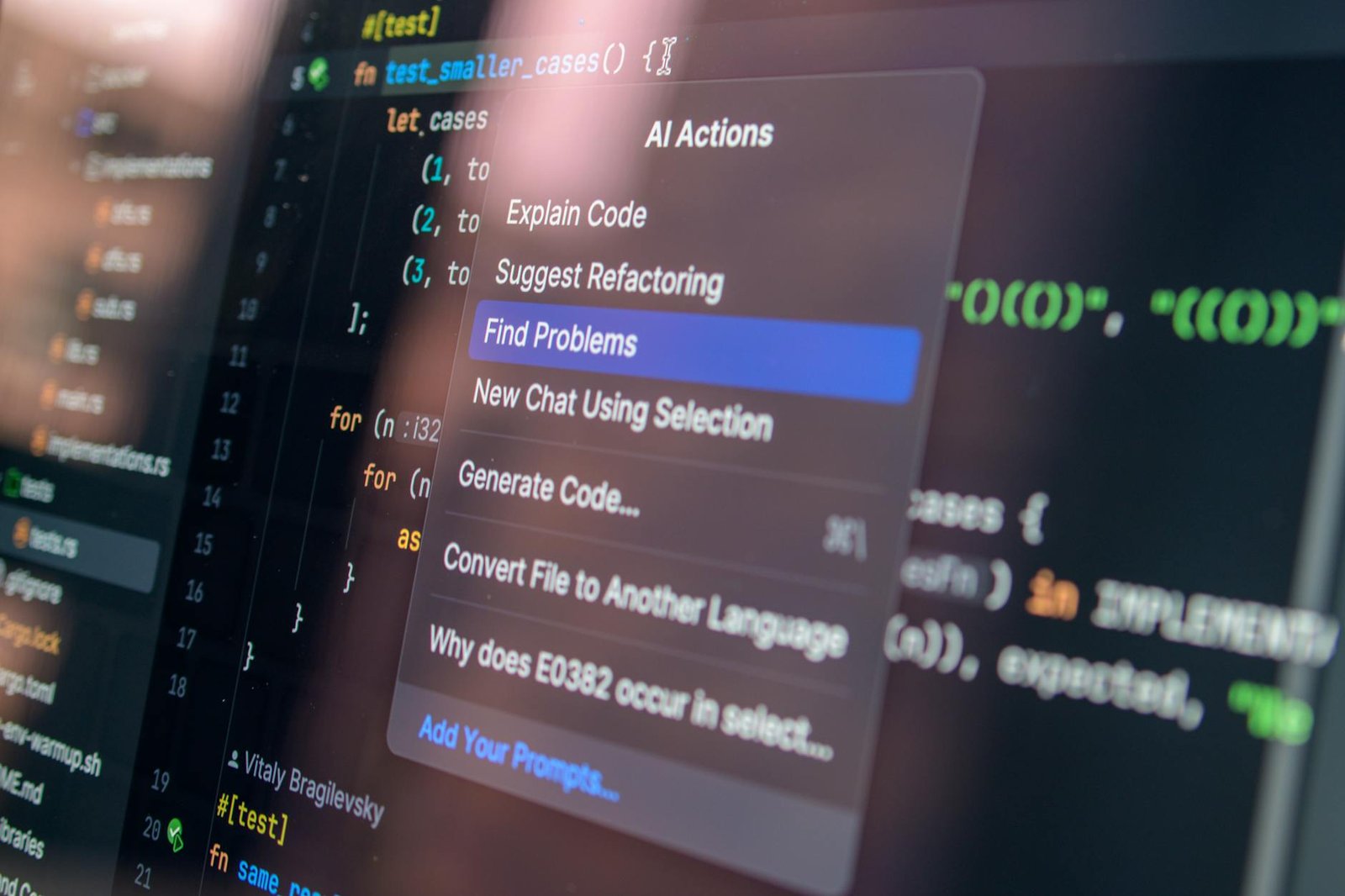
As small business owners, you’re constantly looking for ways to streamline your software development process and stay ahead of the competition. With AI code assistants becoming increasingly popular in 2026, it’s essential to understand their impact on your business.
The use of AI-powered tools is not a new phenomenon, but its adoption has gained momentum in recent years. According to industry reports, the global market for artificial intelligence in software development is expected to grow significantly in the coming years. This rapid growth is largely driven by the need for businesses to be more efficient and agile in an increasingly complex technological landscape.
As we explore the role of AI code assistants in small business software development, it’s essential to consider both the benefits and challenges that come with their implementation. In this article, we’ll delve into the rise of AI code assistants, discuss their benefits, examine the technical foundation behind them, and look at adoption rates and statistics. We’ll also explore what this means for your business and provide actionable insights on how to get started.
The Rise of AI Code Assistants
As we explore the role of AI code assistants in small business software development, it’s essential to consider both the benefits and challenges that come with their implementation. In this article, we’ll delve into the rise of AI code assistants, discuss their benefits, examine the technical foundation behind them, and look at adoption rates and statistics.
Key Statistics on AI Adoption
According to the AI-Generated Code Statistics 2026: Can AI Replace Your Development Team?, a staggering near 50% of code is now generated by AI. This trend is particularly pronounced in small businesses, where developers are increasingly relying on AI tools to enhance their coding efficiency, reduce errors, and streamline workflows.
Furthermore, the same study reveals that 82% of developers use AI tools weekly, with 59% running three or more in parallel. This widespread adoption is a testament to the growing recognition of AI code assistants as indispensable tools for engineers.
The Role of AI Coding Assistants
AI coding assistants like GitHub Copilot and Cursor AI are becoming increasingly sophisticated, capable of understanding repositories, making multi-file changes, running tests, and iterating on tasks with minimal human input. These agents can significantly reduce the time-to-first-commit for routine coding tasks, freeing up developers to focus on higher-level decision-making.
Notably, a recent survey found that over 78% of developers now rely on AI tools to enhance their coding efficiency, reduce errors, and streamline workflows (Source: The Impact of AI Coding in 2026: Developer Productivity Revolution with 90% AI-Generated Code).
Pros and Cons of AI Code Assistants
When considering the adoption of AI code assistants, small business owners must weigh the benefits against potential drawbacks. Some key pros include:
- Reduced time-to-first-commit for routine coding tasks
- Improved coding efficiency and accuracy
- Enhanced collaboration and communication between developers
- Scalability and flexibility in adapting to changing project requirements
However, some cons to consider are:
- Dependence on high-quality training data and continuous updates
- Potential for errors or inaccuracies in generated code
- Over-reliance on AI tools may lead to decreased coding skills among developers
- Integration with existing development workflows and tools can be challenging
Benefits of AI Coding Agents
The integration of AI coding agents has significantly impacted the software development landscape in small businesses. These tools are designed to boost productivity and reduce errors, making them an indispensable asset for developers.
Enhanced Productivity and Reduced Errors
Research suggests that human review still rules when it comes to accepting AI-suggested code (~30% gets accepted) (Source: Top 5 AI Coding Assistants of 2026). However, with the right training and fine-tuning, AI coding agents can significantly improve code quality and efficiency.
Seamless Integration with GitHub Repositories
One of the key differentiators of top-notch AI coding agents is their ability to integrate seamlessly with GitHub repositories. These tools offer suggestions based on the entire codebase, not just the current file (Source: AI-Generated Code Statistics 2026). This feature enhances collaboration by suggesting code in context, making it easier for teams to work together and improve overall development efficiency.
Pros and Cons of AI Coding Agents
| Pros | Cons |
|---|---|
| • Boosts productivity and reduces errors | • Dependence on high-quality training data and continuous updates |
| • Integrates seamlessly with GitHub repositories | • Potential for errors or inaccuracies in generated code |
| • Enhances collaboration by suggesting code in context | • Over-reliance on AI tools may lead to decreased coding skills among developers |
Real-World Application
Notably, many small businesses are already leveraging the benefits of AI coding agents. By adopting these tools, companies can streamline their development workflows, reduce costs, and improve overall efficiency. Furthermore, as AI technology continues to evolve, we can expect even more sophisticated coding agents that will further revolutionize software development.
Next Steps
If you’re considering integrating AI coding agents into your small business’s software development workflow, here are some next steps to take:
- Evaluate the current state of your codebase and identify areas where AI assistance could be beneficial.
- Research top AI coding assistants and their features to determine which one best fits your needs.
- Schedule a meeting with your development team to discuss the potential benefits and challenges of implementing AI coding agents.
By embracing AI coding agents, small businesses can unlock significant productivity gains and improve code quality.
The Technical Foundation
Modern AI copilots rely on transformer-based large language models (LLMs) fine-tuned specifically for code generation. These LLMs have become the backbone of AI coding agents, enabling them to understand and generate complex code snippets with remarkable accuracy.
Transforming Code Generation
The use of LLMs in AI coding agents has revolutionized the way code is generated and reviewed. According to The Impact of AI Coding in 2026: Developer Productivity Revolution with 90% AI-Generated Code, the introduction of LLMs has led to a significant increase in developer productivity, with many developers adopting AI-assisted development tools.
AI coding agents like Claude Code, Codex, Cursor, and GitHub Copilot are increasingly capable of acting as autonomous agents that understand repositories, make multi-file changes, run tests, and iterate on tasks with minimal human input. This shift has led to a significant reduction in time-to-first-commit for routine coding tasks, as evident from How AI Copilots Are Changing Software Development in 2026 | Salt Technologies Blog.
Pros and Cons of LLMs in AI Coding Agents
While the use of LLMs has numerous benefits, there are also some limitations to consider. Some of the key pros and cons of LLMs in AI coding agents include:
- Pros:
- Increased developer productivity
- Improved code quality
- Reduced time-to-first-commit for routine coding tasks
- Cons:
- Limited domain knowledge (LLMs can be narrow or broad, but may not always cover specific areas of expertise)
- Dependence on high-quality training data
Best AI Coding Agents for 2026
When it comes to selecting the best AI coding agents for 2026, there are several options available. Some of the top contenders include:
- GitHub Copilot: powered by OpenAI’s Codex model
- Amazon CodeWhisperer: uses Amazon’s proprietary models trained on internal and public code repositories (The Impact of AI Coding in 2026: Developer Productivity Revolution with 90% AI-Generated Code)
- Claude Code
- Codex
Each of these agents has its unique strengths and weaknesses, and the choice ultimately depends on the specific needs of your business.
Moreover, it is essential to note that human review still plays a crucial role in ensuring code quality. According to Coding on Copilot: 2023 Data Suggests Downward Pressure on Code Quality (incl 2024 projections) – GitClear, only ~30% of AI-suggested code gets accepted, highlighting the importance of human oversight.
Adoption Rates and Statistics
By the end of 2025, roughly 85% of developers regularly use AI tools for coding—whether to speed up routine tasks, get suggestions for the next line of code, or answer specific technical questions 1.
The Rise of AI-Assisted Code
25% of Google’s code is AI-assisted, yet CEO Sundar Pichai says engineering velocity (not replacement) is the real gain (+10% speed). This shift towards AI-assisted coding has significant implications for small business owners looking to optimize their development processes.
Notably, this trend is expected to continue in 2026. According to industry research sources, 90% of code will be AI-generated by the end of the year 2.
Adoption Statistics
82% of developers reported using AI tools weekly in Q1 2025, with 59% running three or more in parallel. This widespread adoption is driven by the desire to enhance coding efficiency, reduce errors, and streamline workflows 3.
Moreover, over 78% of developers now rely on AI tools to augment their coding capabilities.
Pros and Cons of AI Coding Assistants
| Tool | Pros | Cons |
|---|---|---|
| LLM (Large Language Model) | High accuracy, fast response times | Limited domain knowledge, potential for bias |
| Copilot | Automated code completion, improved productivity | Requires human review and validation |
In conclusion, the adoption of AI coding assistants is on the rise, with significant implications for small business owners looking to optimize their development processes. By understanding the benefits and drawbacks of these tools, businesses can make informed decisions about how to integrate AI into their workflows.
[1] AI-Generated Code Statistics 2026: Can AI Replace Your Development Team?
[2] The Impact of AI Coding in 2026: Developer Productivity Revolution with 90% AI-Generated Code
[3] Top 5 AI Coding Assistants of 2026: Features and Pros | Ryz Labs | Ryz Labs Learn
The Bottom Line
As we’ve explored the transformative power of AI code assistants in software development, it’s clear that small business owners should consider adopting these tools to enhance their coding efficiency and streamline workflows. By leveraging AI code agents, businesses can reduce errors, boost productivity, and stay ahead of the competition.
Key Takeaways
- Over 78% of developers now rely on AI tools to enhance their coding efficiency, reduce errors, and streamline workflows (AI-Generated Code Statistics 2026: Can AI Replace Your Development Team?).
- Best AI coding agents for 2026 have emerged as top choices, offering features such as real-time code suggestions, error detection, and automated testing.
- Small business owners can implement AI code assistants to audit their current codebase, identify areas for improvement, and optimize workflows.
Next Steps
If you’re interested in adopting AI code assistants for your small business, here’s a low-friction next step you can take this week:
Audit your current codebase by identifying areas where AI code agents can help. Schedule a 30-minute call with your developer to discuss implementing AI code assistants and exploring the benefits of AI-generated code. This simple step can help you get started on the path to improved coding efficiency and streamlined workflows.
Don’t miss out on the opportunity to stay ahead of the competition by embracing the power of AI code assistants in software development.