Step into any independent restaurant along Lawrence’s Essex Street or Lowell’s Merrimack Street, and you will instantly catch Spanish, Khmer, Portuguese, Vietnamese, and Arabic threading through the dining room before the first appetizer hits the table. Your regulars speak these languages at home every single night.
The critical digital question is whether your restaurant’s website speaks them too—and whether you can deploy a bilingual menu pipeline without quietly dismantling the local Google rankings you have spent years building.
For family-run establishments throughout the Merrimack Valley, managing multiple languages online introduces distinct technical optimization challenges. Translate your web pages carelessly, and search engines will flag your domain for duplicate content, fracture your core page authority, or serve the wrong language version to the wrong diner.
Done correctly, however, a structured multilingual menu can expand your local consumer base, maximize conversions among neighbors who prefer to order in their native language, and significantly elevate your local map-pack search engine visibility.
The Strategic Importance of Language Access in the Merrimack Valley
Independent, immigrant-owned restaurants are the lifeblood of the Merrimack Valley food scene. National trade data tracks that nearly 29% of all U.S. restaurant and hospitality enterprises are immigrant-owned, a metric that spikes dramatically across high-density urban hubs like Lowell and Lawrence.
Your online menu is the single most critical asset your business controls; forcing your entire digital audience through an English-only checkout funnel narrows your operational pipeline.
[ Traditional English Funnel ] ──► Invisible to non-English localized searches
[ Multi-Lingual Subdirectory ] ──► Indexable in Google ──► Powers Map-Pack Justification Snippets
Linking Language Access to Consumer Trust
A multi-lingual menu serves as a high-value signal of cultural authenticity before a guest ever samples your food. When a multi-generational family in South Lawrence accesses a digital menu displaying dishes precisely translated alongside detailed English descriptions, that layout builds immediate consumer confidence.
This cultural connection influences the digital feedback loop: clear communication drops order friction, which drops kitchen errors, resulting in higher online ratings that determine your placement on local mobile search results.
The Three Technical Ingestion Methods: Why Google Favors Subdirectories
Publishing an authentic alternate menu requires choosing how your website structures its server files. Review the three common implementation pathways before deploying code:
2026 Multilingual Restaurant Site Architecture
| Performance Metric | Option 1: Subdirectories | Option 2: Subdomains | Option 3: JavaScript Widgets |
| URL File Structure | [site.com/es/](https://site.com/es/) or [site.com/km/](https://site.com/km/) |
es.yourrestaurant.com |
yourrestaurant.com (Static URL) |
| Domain Authority Impact | Consolidated. 100% of search weight stays on your root domain. | Fractured. Treated as an entirely separate web entity. | Neutral. Adds zero external search asset indexing. |
| Search Engine Visibility | Absolute. Every translated dish is independently indexable. | High. Requires separate backlink and local optimization. | Zero. Hidden from crawler bots behind client-side rendering. |
| Core Web Vitals Impact | Clean. Loads optimized server-side text elements. | Clean. Operates standard server templates. | Destructive. Bloated scripts stall mobile page speeds. |
| Fulfillment Link Path | Native checkout workflows map cleanly to the cart. | Requires multi-subdomain session tracking tokens. | Can cause layout breaks during checkout conversions. |
The Subdirectory Verdict for Small Operations
For independent Merrimack Valley kitchens, Separate Subdirectories represent the only configuration that delivers a true return on investment. Giving each language its own dedicated folder allows search engines to crawl and index your alternate menus as individual assets.
When a user runs an intent-driven search like “pollo guisado cerca de mí” in Lawrence, Google can route them directly to your Spanish landing page, while standard English queries continue to settle on your primary homepage.
This keeps your brand equity concentrated on one domain name, allowing reviews, food blog mentions, and local citations to benefit your entire web presence simultaneously.
Deploying hreflang Code Strings Safely
If language subdirectories provide the structural foundation for your menus, hreflang code attributes serve as the data routing system. These hidden header elements communicate explicit instructions to search engine algorithms, stating: “This page is the Spanish translation of our English menu asset. Display the correct URL version to users based on their localized device language defaults.”
[ English Page: /menu/ ]  ──► <link rel="alternate" hreflang="es" href="/es/menu/" /> ──► [ Spanish Page: /es/menu/ ]
[ English Page: /menu/ ]  ◄── <link rel="alternate" hreflang="en" href="/menu/" />    ◄── [ Spanish Page: /es/menu/ ]
The Strict Reciprocity Rule
To ensure your alternate menus index properly, your code must enforce Strict Reciprocity. If your English menu page features an hreflang pointer directed at your Spanish subdirectory (/es/menu/), the Spanish page must contain a reciprocal tag pointing back to the English asset (/menu/).
If these data loops are broken or missing, Google’s edge-rendering systems will completely ignore the tag layout.
This can lead to your alternate pages competing against each other, confusing search engine algorithms, and causing your pages to drop from organic results entirely.
Technical Integration Options: WordPress vs. Managed Frameworks
Managing multi-lingual data models requires choosing content systems that fit your team’s operational bandwidth.
The Open Content Path (e.g., WordPress + WPML or Polylang)
If your restaurant runs a standalone website on WordPress, deploying translation plugins like WPML or Polylang provides a robust, search-optimized infrastructure. These engines generate localized subdirectories automatically, manage reciprocal hreflang mapping in the background, and allow you to configure individual menu descriptions cleanly.
The compromise is administrative: your internal team remains responsible for monitoring plugin updates, verifying database backups, and testing your online checkout configurations to prevent code conflicts.
The Managed Restaurant System Path (e.g., Menufy)
For kitchens seeking a turnkey operational blueprint, managed restaurant platforms like Menufy bundle your website design, local search presence, and online checkout workflows under a single vendor bill.
Before launching a multi-lingual system on any managed network, ensure the system supports unique, crawlable indexable URLs for its alternate languages. If a platform merely runs a client-side text-swapping button on a static page, your translated dishes will remain hidden from outside search engines.
Eliminating Local SEO Disconnections
A common mistake among small business owners is assuming that website translations will automatically update their local map presence. Your website database and your Google Business Profile (GBP) function as entirely separate platforms, but their tracking algorithms are deeply dependent on each other.
[ Smartphone Set to Spanish ] ──► Searches local map pack ──► Google crawls linked site domain
                                                                          │
                                                                          ▼
[ Justification Snippet Loaded ] ◄── "Their website mentions 'Pollo Guisado'..." ◄── Extracts /es/ Data
When a consumer utilizes a mobile device with non-English operating system defaults to search for dining options, Google’s map-pack algorithm crawls your linked website domain.
If it uncovers verified subdirectory translations, it extracts those matching terms to populate high-visibility Justification Snippets right inside the map results, validating your restaurant’s relevance and driving immediate foot traffic to your doors.
Enforcing Absolute Name, Address, and Phone (NAP) Consistency
When deploying a multi-lingual site, your core identity metrics must remain completely unaltered across your language folders. Your brand’s legal trade name is a core identification metric that search engines match against local business listings; it must never be translated.
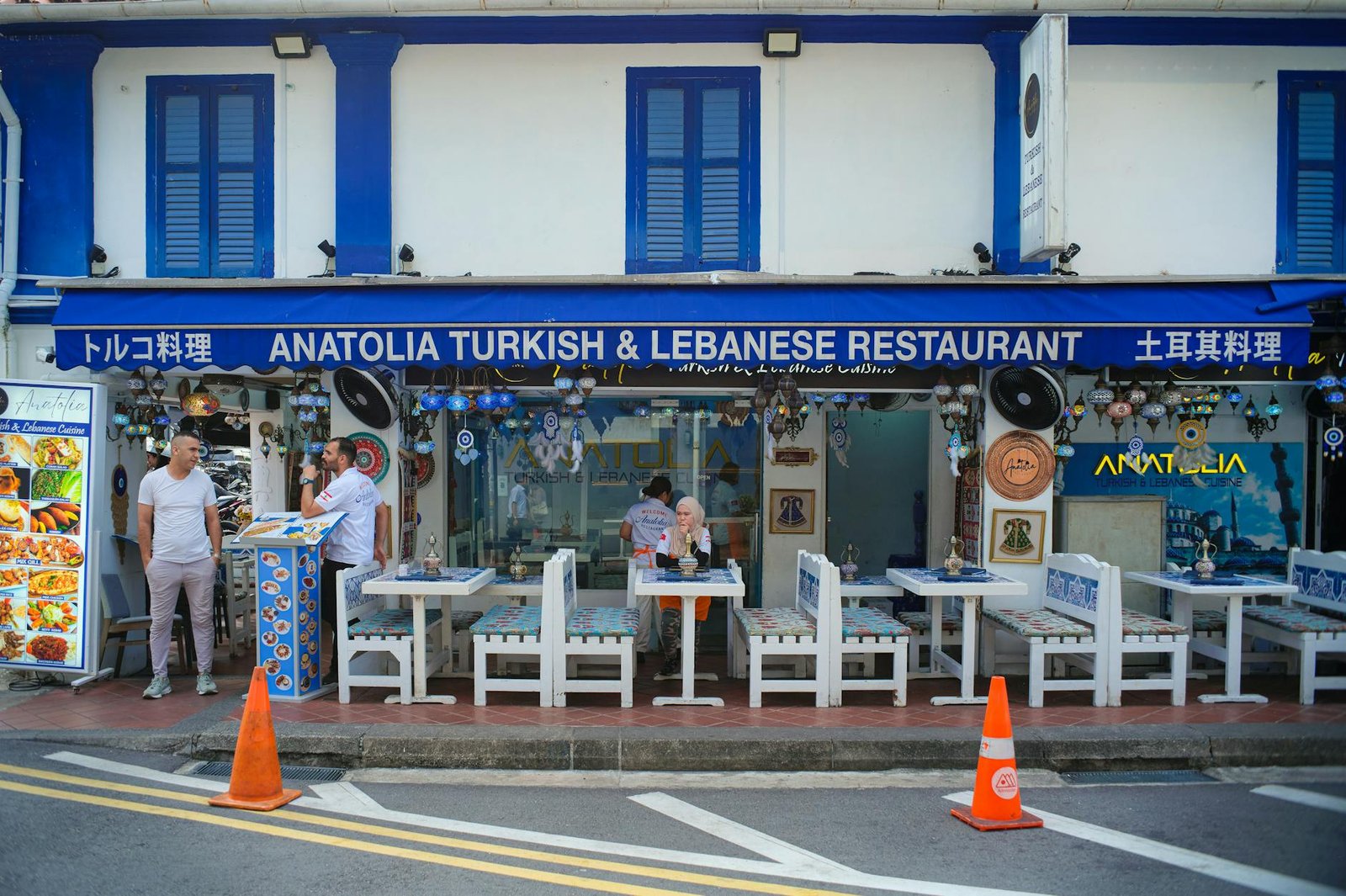
If your storefront awning reads “La Sultana Bakery,” that exact character string must map uniformly across your English homepage, your Spanish subfolder, your Google Business Profile, and your Yelp listings. Modifying or translating your trading name breaks your local citation loops, causing search algorithms to drop your overall map ranking.
The Four-Week Multi-Lingual Deployment Roadmap
Do not attempt to translate your entire site layout in a single afternoon. Divide your implementation plan into a practical, month-long rollout blueprint:
-
Week 1: Inventory Backlog Isolation. Run a performance audit inside your Google Search Console dashboard. Identify the primary high-volume pages that drive 80% of your customer engagement—typically your core lunch/dinner menu, your catering page, your operating hours, and your location maps. Target these assets exclusively to avoid scope creep.
-
Week 2: Human Verification Tuning. Run your core descriptions through automated tools for an initial draft, but pass that copy to a native speaker on your kitchen or management team for final review. Menu phrasing requires localized cultural context; if your text reads like a cold, literal machine translation, it erodes customer trust.
-
Week 3: Subdirectory Coding & Architecture. Configure your CMS to deploy clean subdirectory pathways (e.g.,
/es/menu/). Inject your reciprocalhreflangcode parameters into the page headers and build localized, unique meta-title structures for your new page assets. -
Week 4: API Testing & Live Verification. Launch your bilingual pages quietly. Clear your browser cache and place a live test order on a smartphone to ensure your menu toggles, modifier configurations, and credit card processing modules function smoothly without script errors.
The Bottom Line
A multilingual online menu is a powerful, high-return local marketing initiative for restaurants operating across the Merrimack Valley. Transitioning your platform into an open, indexable subdirectory system ensures you can speak directly to your target demographics in the language they naturally think in, without sacrificing your search rankings.
By avoiding performance-draining client-side translation widgets, enforcing reciprocal metadata tags, and maintaining a rock-solid, character-identical local data presence, you protect your local search visibility, drop customer ordering friction to zero, and secure a highly loyal customer base.
Need Help Optimizing Your Local Restaurant Website or POS Integrations?
If you are an independent restaurant operator, cafe owner, or local brand manager across the Boston area and need an optimized website that supports automated multi-lingual subdirectories, seamless online checkout funnels, and real-time POS terminal data sync pipelines, we can assist. Monir Tech Solutions specializes in restaurant website development, multi-channel marketing automation, and advanced local SEO systems.
Reach out to our restaurant technical engineering group anytime at info@monirtechsolutions.com and we will respond within 24 hours.