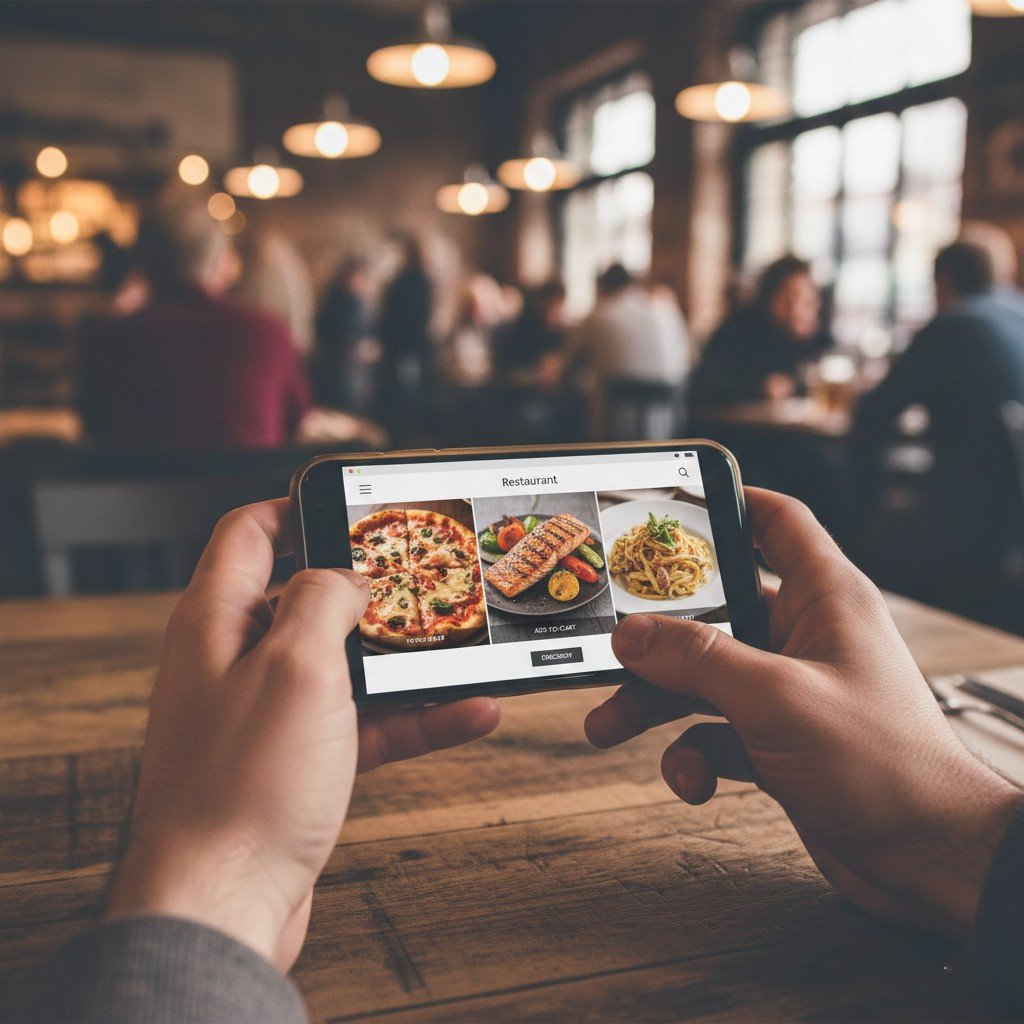
Your customers are hungry. They’re standing on the street, phone in hand, searching for somewhere to eat. In those few seconds, they’ll decide between your restaurant and your competitor.
The question is: what do they see when they find you?
If your website is hard to read, slow to load, or impossible to navigate on a phone, you’ve already lost them. They’ll tap the back button and find somewhere else to eat.
This isn’t speculation. It’s happening right now, every day, to restaurants without mobile-friendly websites.
The Numbers Don’t Lie
Here’s what the data tells us about how people find restaurants today:
Over 68% of all restaurant searches happen on mobile devices. That number climbs even higher during lunch and dinner hours when people are actively looking for places to eat.
But here’s what really matters: 57% of users say they won’t recommend a business with a poorly designed mobile website. And 40% will go to a competitor’s site after a bad mobile experience.
For restaurants, this translates directly to empty tables and lost revenue.
What Makes a Website “Mobile-Friendly”?
A mobile-friendly website isn’t just a smaller version of your desktop site. It’s a completely optimized experience designed for how people actually use their phones.
Fast Loading Speed
Mobile users expect your site to load in under 3 seconds. Every additional second increases the chance they’ll leave. For restaurants, this means optimizing images, minimizing code, and choosing reliable hosting.
Easy-to-Read Text
No one wants to pinch and zoom to read your menu. Text should be large enough to read comfortably, with plenty of spacing between lines and sections.
Tap-Friendly Buttons
Fingers are bigger than mouse cursors. Your phone number, reservation button, and menu links should be large enough to tap without accidentally hitting something else.
Simple Navigation
On mobile, less is more. Visitors should be able to find your menu, hours, location, and contact information within seconds. A complicated navigation structure just frustrates hungry customers.
Click-to-Call Functionality
When someone wants to make a reservation, they shouldn’t have to memorize your phone number. One tap should connect them directly to your restaurant.
5 Ways a Mobile-Friendly Website Increases Revenue
Let’s talk about what actually matters: how a better mobile experience puts more money in your register.
1. More Online Orders
If you offer online ordering, mobile optimization is critical. A smooth, easy ordering process on mobile can increase online orders by 30% or more. When it’s easy to order, people order more often.
Think about the difference between struggling through a clunky ordering system and simply tapping a few buttons to get your favorite dish delivered. Which experience creates repeat customers?
2. Increased Reservations
Many diners prefer booking online rather than calling. A mobile-friendly reservation system removes friction from the booking process. The easier it is to reserve a table, the more reservations you’ll get.
3. Better Google Rankings
Google uses mobile-friendliness as a ranking factor. This means a mobile-optimized site appears higher in search results when someone searches for “restaurants near me” or “best pizza in Boston.”
Higher rankings mean more visibility. More visibility means more customers walking through your door.
4. Improved First Impressions
Your website is often the first interaction someone has with your restaurant. A professional, easy-to-use mobile site signals that you care about quality and customer experience.
If your website looks outdated or doesn’t work properly, potential customers assume your food and service might be the same way.
5. Social Media Conversions
When you post on Instagram or Facebook, where do those links lead? If someone clicks through to a website that doesn’t work on their phone, you’ve wasted that social media effort.
A mobile-friendly site ensures that your social media marketing actually converts followers into customers.
Common Mobile Website Mistakes Restaurants Make
Knowing what to avoid is just as important as knowing what to do right.
Posting a PDF Menu
This is one of the most common mistakes. PDF menus are nearly impossible to read on mobile without constant zooming and scrolling. Your menu should be built directly into your website as regular text that’s easy to read on any device.
Hiding Contact Information
Your phone number, address, and hours should be visible immediately. Don’t make visitors hunt for basic information. Many restaurants bury this in a “Contact” page when it should be front and center.
Using Flash or Outdated Technology
Some older websites use technology that simply doesn’t work on modern mobile devices. If your site was built more than five years ago and hasn’t been updated, there’s a good chance it has compatibility issues.
Ignoring Loading Speed
Large, unoptimized images are the biggest culprit. That beautiful high-resolution photo of your signature dish might look great, but if it takes 10 seconds to load, no one will see it.
No Clear Call-to-Action
What do you want visitors to do? Order online? Make a reservation? Call for catering? Your mobile site should guide visitors toward a specific action with clear, prominent buttons.
What About Social Media? Isn’t That Enough?
Social media is important, but it’s not a replacement for your own website.
You don’t own your Facebook or Instagram page. The platform controls what your followers see, and algorithms can change overnight. A website is digital real estate that you control completely.
Additionally, not everyone uses social media. When someone searches Google for restaurants in your area, your website appears in results. Your Instagram page might not.
The best approach combines both: use social media to engage with customers and build awareness, then drive them to your website to take action.
How to Know If Your Current Website Is Mobile-Friendly
Not sure if your website passes the test? Here’s a quick way to check:
Pull out your phone and visit your own website. Try to complete these tasks:
- Find your menu and read it easily
- Locate your hours and address
- Tap your phone number to call
- Make a reservation or place an order
- Navigate back to the homepage
If any of these tasks felt frustrating or took more than a few seconds, your customers feel that frustration too.
You can also use Google’s free Mobile-Friendly Test tool. Just enter your website URL, and it will tell you if Google considers your site mobile-friendly.
The Cost of Waiting
Every day without a mobile-friendly website is a day you’re losing potential customers to competitors who’ve already made the investment.
Consider this: if a poor mobile experience costs you just two customers per day, at an average check of $30, that’s over $20,000 in lost revenue per year.
A professional, mobile-optimized website typically costs a fraction of that and lasts for years.
Making the Switch
Updating your website doesn’t have to be overwhelming. The key is working with someone who understands both web development and the restaurant industry.
A good restaurant website should include:
- Mobile-responsive design that works on all devices
- Easy-to-read menu integration
- Online ordering capability (if applicable)
- Reservation system integration
- Click-to-call functionality
- Google Maps integration for directions
- Fast loading speeds
- Search engine optimization
The investment pays for itself through increased orders, reservations, and customer loyalty.
Your Customers Are Searching Right Now
At this very moment, someone in your area is looking for a place to eat. They’re on their phone, scrolling through options, making a decision that takes just seconds.
The question isn’t whether you need a mobile-friendly website. The question is how many customers you’re willing to lose before you get one.
Ready to upgrade your restaurant’s online presence? Get a free quote or schedule a consultation to discuss how we can help your restaurant attract more customers with a professional, mobile-friendly website.